How to Start a Private Therapy Practice in New York
- Form a PLLC — Submit Articles of Organization to the NYSED Office of Professions for consent, then file with the NY Department of State.
- Fulfill Publication Requirements — Publish your PLLC formation in two designated county newspapers within 120 days of filing.
- Obtain an EIN — Register your practice with the IRS for tax filing and to open a business bank account.
- Acquire NPI Numbers — Secure a Type 1 NPI for yourself and a Type 2 NPI for your PLLC via the NPPES portal.
- Secure Malpractice Insurance — Purchase professional liability coverage tailored for NY mental health professionals.
- Complete CAQH ProView — Build and fully attest your CAQH profile to prepare for commercial insurance paneling.
- Enroll in eMedNY & PECOS — Register with NY Medicaid via eMedNY and Medicare via PECOS (if eligible).
- Credential with Payers — Submit credentialing applications to top NY networks like Empire BlueCross BlueShield and Fidelis Care.
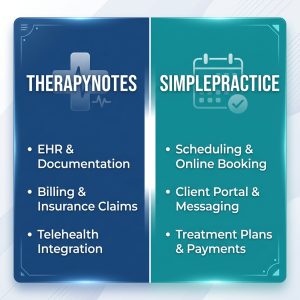
- Set Up EHR & Billing — Implement platforms like SimplePractice and clearinghouses like Availity or Waystar.
No. New York State law requires licensed mental health professionals (LCSWs, LMHCs, LMFTs, Psychologists) to form a Professional Limited Liability Company (PLLC) or a Professional Corporation (PC). Before filing with the Department of State, your entity must be approved by the NYSED Office of the Professions.
Within 120 days of forming your PLLC, New York law requires you to publish a notice of formation in two designated newspapers in the county of your principal business location for six consecutive weeks. Afterward, you must file a Certificate of Publication with the DOS.
Insurance credentialing in New York typically takes 90 to 120 days. Payers like Empire BlueCross BlueShield and Healthfirst require a fully attested CAQH ProView profile and an active NY state license before they will begin processing your application.
Yes, if you plan to accept Medicaid Managed Care plans (like Fidelis Care or MetroPlus). New York requires providers to be enrolled in the fee-for-service Medicaid program via the eMedNY portal as a prerequisite for managed care credentialing.
No. Mental health therapists in New York, including LCSWs, LMHCs, LMFTs, and LCATs, do not have prescribing privileges. Therefore, they do not require a DEA number or a CDS permit to operate a private practice.
Navigating the New York Private Practice Landscape
Starting a private therapy practice in New York is one of the most rewarding — and most bureaucratically complex — career moves a licensed clinician can make. Unlike establishing a practice in other regions, New York imposes unique corporate structures and heavy regulatory oversight through the NYSED Office of the Professions and the Department of State.
Between mastering the PLLC formation requirements, navigating the state’s mandatory newspaper publication laws, securing your NPI registration, and building out a compliant CAQH profile, the average therapist spends months on administrative hurdles before they can start billing. Whether you’re an LCSW, LMHC, or LMFT, this guide strips away the confusion and gives you a clear path to opening your doors.
Critical Insight: NYSED Approval is Mandatory
You cannot simply go to the New York Department of State website and form an LLC. Mental health professionals are required to form a Professional Limited Liability Company (PLLC). This involves submitting a Certificate of Good Standing and your proposed Articles of Organization to the New York State Education Department (NYSED) for a Certificate of Consent first, adding significant time to your launch timeline.
New York Compared to Neighboring States
| Requirement | New York | New Jersey | Connecticut |
|---|---|---|---|
| Entity Structure | PLLC or PC only | LLC or PLLC | LLC or PLLC |
| State Income Tax Rate | 4.00% – 10.90% | 1.40% – 10.75% | 3.00% – 6.99% |
| Publication Requirement | Yes (2 Newspapers) | No | No |
| Medicaid Enrollment | eMedNY FFS Required | NJMMIS | CT DSS |
| Top Commercial Payers | Empire BCBS, Fidelis, UHC | Horizon BCBS, Aetna | Anthem BCBS, Cigna |
The 8-Step Licensing & Credentialing Roadmap
To avoid costly delays, follow these steps in sequential order. Do not apply for insurance credentialing until your NPI and CAQH profiles are fully active.
Form Your PLLC via NYSED and DOS
Obtain a Certificate of Consent from the NYSED Office of Professions before submitting your Articles of Organization to the NY Department of State. Standard LLCs are not permitted for therapy practices in NY.
The Publication Rule
Within 120 days of DOS approval, you must publish a notice in two county newspapers for six consecutive weeks and file a Certificate of Publication. Costs vary drastically by county.
Secure an EIN & Business Banking
Apply for a free Employer Identification Number (EIN) through the IRS website. Once your PLLC is formed and your EIN is issued, open a dedicated business checking account to keep your practice finances completely separate from personal assets.
Acquire NPI Type 1 and Type 2
Navigate to the NPPES portal to register for your National Provider Identifiers. You need your individual Type 1 NPI as a clinician, and a Type 2 NPI for your new PLLC. Both are required for the CMS-1500 claim forms.
Essential Tax Setup
Your Type 2 NPI must be linked directly to your practice’s EIN, not your SSN. This ensures correct tax reporting during billing.
Read the full NPI Guide →Purchase NY Malpractice Insurance
Secure professional liability insurance that meets New York State standards. Carriers like HPSO or CPH & Associates offer tailored policies for LCSWs and LMHCs. Your policy face sheet must be ready before submitting your CAQH application.
Build Your CAQH ProView Profile
CAQH ProView is the universal credentialing database used by nearly every commercial payer in New York. Upload your NY license, NPIs, malpractice face sheet, and resume. You must attest to the profile’s accuracy every 120 days.
Enroll in eMedNY & PECOS
If you plan to accept Medicare, submit the CMS-855I via PECOS. For Medicaid, you must enroll in the fee-for-service program via eMedNY. This step is mandatory before you can join NY Medicaid Managed Care plans like Fidelis Care or Healthfirst.
Credential with Commercial Payers
Begin paneling with major networks such as Empire BlueCross BlueShield, UnitedHealthcare/Optum, Aetna, and Cigna/Evernorth. Expect wait times of 90-120 days while they verify your credentials through CAQH.
Reimbursement Codes
Focus on contracting rates for core CPT codes: 90834 (45-min psychotherapy) and 90837 (60-min psychotherapy) and ICD-10-CM to ensure your practice remains profitable.
Implement EHR & Billing Portals
Deploy an EHR like SimplePractice or Spruce Health for secure teletherapy and charting. Connect your practice to clearinghouses like Availity (critical for BCBS) or Waystar to submit clean electronic claims seamlessly.
New York Break-Even Calculator
Estimate how many weekly sessions you need to cover your PLLC overhead, accounting for NY state income tax and specific practice expenses.
$2.5B+
Estimated annual spending on mental health services in New York. Demand for in-network therapists is at an all-time high.
Launch Your NY Practice Without the Headache
Let TherapyDial handle the red tape. From NPI acquisition to CAQH setup and comprehensive payer credentialing, we do the heavy lifting.
- ✓ Professional Medical Billing
- ✓ FREE Insurance Credentialing
- ✓ FREE TherapyDial Profile Listing
- ✓ Priority Practice Support
More Clinical Resources
Understanding Credentials
Read our deep dive into the LCSW credential and therapy qualifications.
NPI Guide
Learn more about what an NPI number is and why your PLLC needs a Type 2 identifier.