ICD vs CPT Codes: The Fundamental Differences
Master the essential language of healthcare billing. Learn how to establish medical necessity, reduce denials, and streamline your practice's revenue cycle.
Why Understanding Medical Codes Matters for Your Practice
In the complex world of healthcare billing, ICD and CPT codes form the essential language that connects clinical care with appropriate reimbursement. While often mentioned together, these coding systems serve distinctly different purposes that every healthcare provider must understand. Getting them right means cleaner claims, faster payments, and fewer compliance headaches.
Having optimized medical practice operations for over a decade, we've seen how proper coding education directly impacts a clinic's financial health. In this comprehensive 2026 guide, we'll break down how ICD and CPT codes are different, explore why each is critically important, and provide practical strategies to implement this knowledge effectively in your practice. By the end, you'll have a crystal-clear understanding of how these systems work together to accurately tell the story of patient care.
ICD vs CPT Codes: The Fundamental Differences
At their core, ICD and CPT codes serve different masters in the healthcare ecosystem. Think of them as two different languages that, when used together, create a complete clinical picture.
The Golden Rule of Coding
ICD codes explain WHY treatment was necessary (the diagnosis), while CPT codes describe WHAT specific service was performed (the procedure). This fundamental distinction forms the foundation of accurate medical billing.
What are ICD Codes? (The "Why")
ICD codes (International Classification of Diseases) represent the diagnosis side of the equation. These codes describe the patient's condition, symptoms, or reason for seeking care—essentially establishing medical necessity for the services provided.
The World Health Organization (WHO) maintains ICD codes for global use, making them a universal standard for tracking health trends. In behavioral health billing, many claim denials stem from insufficient specificity in ICD coding (e.g., failing to specify the episode type in Depression F32/F33 codes) rather than problems with the CPT code itself.
ICD-10-CM Code Example
F41.1 — Generalized Anxiety Disorder
This code specifies the exact psychiatric diagnosis establishing the medical need for therapeutic intervention. Read our full guide on Anxiety ICD-10 Coding.
What are CPT Codes? (The "What")
CPT codes (Current Procedural Terminology) tell the other half of the story by describing the specific services, procedures, evaluations, and treatments provided to the patient during the session.
The American Medical Association (AMA) develops and maintains CPT codes, serving as the standard procedural language across U.S. healthcare. Practices that strictly monitor their CPT code accuracy typically experience 15-30% fewer claim denials.
CPT Code Example
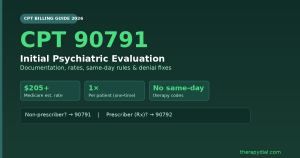
90837 — Psychotherapy, 60 minutes
This code describes the exact therapeutic service rendered, regardless of whether you utilized CBT, EMDR therapy, or psychoanalysis.
Side-by-Side Comparison
| Feature | ICD Codes | CPT Codes |
|---|---|---|
| Primary Purpose | Describe diagnosis / medical necessity | Describe procedures / services |
| Managing Organization | World Health Organization (WHO) | American Medical Association (AMA) |
| Update Frequency | Every 1-4 years (minor annual tweaks) | Several times annually |
| Code Format | Alphanumeric (3-7 characters) | Primarily 5-digit numeric |
| Role in Billing | Establishes "why" treatment was needed | Establishes "what" service was provided |
Why These Coding Systems Matter in 2026
Understanding the differences between ICD and CPT codes is more than an administrative hurdle—it directly impacts your practice's operations, compliance status, and bottom line.
The Financial Impact: Clean Claims
These coding systems form the foundation of the healthcare revenue cycle. Over 30% of claim denials occur due to incorrect coding or a lack of cohesion between the diagnosis and the procedure. The connection between specific diagnoses and procedures must be clear, documented, and defensible in your DAP or SOAP notes.
Compliance and Risk Management
Proper coding isn't just about revenue; it's a legal requirement. HIPAA designates both CPT and ICD codes as standard sets for electronic healthcare transactions. Regular coding audits frequently reveal that practices using outdated codes (like retired DSM-IV translations) face high compliance exposure.
What's New for 2026: ICD-11 Implementation Progress
The transition to ICD-11 represents a significant evolution in diagnostic coding. While ICD-10-CM currently remains the billing standard in the US, the healthcare industry is aggressively preparing for full ICD-11 implementation. This updated classification includes expanded codes for rare diseases and more comprehensive mental health classifications for conditions like Schizophrenia and PTSD.
It also allows for greater specificity regarding neurodivergence, emotional processing issues like Alexithymia, repressed emotions, and personality traits identified in the Big Five Personality framework.
Common Coding Challenges and Solutions
1. Establishing Medical Necessity
The connection between ICD and CPT codes must clearly demonstrate why a procedure was necessary.
Solution: Document the logical clinical relationship in your note. For instance, if billing a prolonged 60-minute crisis session, the ICD code must reflect the severity of the acute episode.
2. Managing Annual Updates
With CPT codes updating frequently and ICD codes shifting annually, staying current is difficult for solo practitioners.
Solution: Offload the administrative drag. Utilize electronic health records that auto-update their code libraries, or partner with a dedicated RCM service.
Stop Guessing on Medical Codes.
Start Getting Paid.
- Professional Medical Coding & Billing
- Denial Management & Appeals
- FREE Insurance Credentialing
- FREE TherapyDial Profile Listing
We verify your ICD/CPT pairings, submit your claims, and fight for your revenue.
HIPAA Compliant & Expertly Managed.
Frequently Asked Questions
TherapyDial Editorial Team
This article was reviewed and updated by the TherapyDial Clinical Revenue Team. Our content follows strict guidelines to ensure coding accuracy, relevance, and compliance. We monitor ICD and CPT board updates to provide mental health professionals with the most reliable operational information for 2026.