Emotions shape how we see, decide, and connect. When feelings are too painful or risky to face, the mind sometimes pushes them out of awareness. This protective reflex—emotional repression—can quiet distress in the short term but often leaves ripples in the body and mind. This guide explains what repression is, how to spot the signs, and practical ways to safely work through it.
Emotional Repression at a Glance
- Repression is the unconscious blocking of painful emotions and memories; suppression is a conscious effort to set feelings aside.
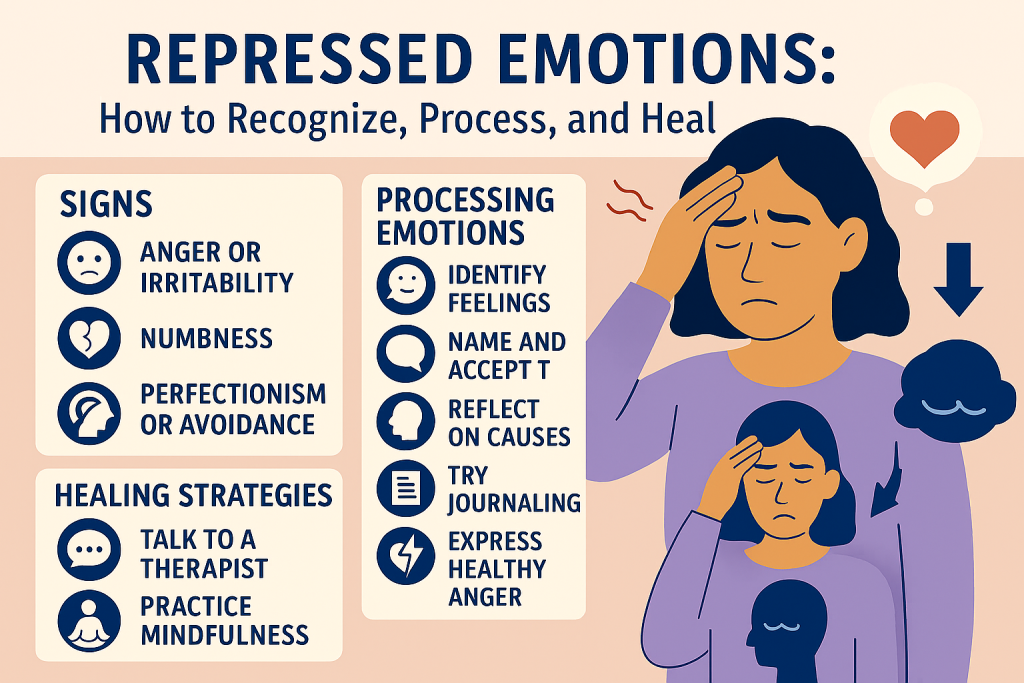
- Physical Signs: Repressed emotions often surface as muscle tension, headaches, stomach upset, or fatigue.
- Emotional Signs: Numbness, sudden anxiety spikes, irritability, or feeling “emotionally flat.”
- Healing Begins with Safety: Gentle, repeatable skills like micro-journaling, mindfulness, and creative outlets help feelings become tolerable.
- Therapy is Highly Effective: Evidence-based therapies like CBT, EMDR, and trauma-focused care provide a safe space to process blocked feelings without getting overwhelmed.
What is Emotional Repression?
In psychology, repression is a defense mechanism where the mind unconsciously keeps distressing feelings, impulses, or memories out of awareness to reduce anxiety. You aren’t choosing to do this; it happens automatically to protect your nervous system. By contrast, suppression is when you knowingly set something aside (e.g., “I’ll think about this after work”).
Plain-English Check: If you’re choosing to park a feeling for later, that’s suppression. If the feeling never seems to “arrive” in your awareness—but instead shows up indirectly as tension, numbness, or avoidance—that is likely repression. If “having no words for feelings” is your norm, you might also want to learn about alexithymia.
Repression vs. Suppression
| Feature | Repression | Suppression |
|---|---|---|
| Control | Unconscious and automatic | Conscious and deliberate |
| Short-Term Effect | Reduces anxiety outside of your awareness | Creates mental space to function temporarily |
| Long-Term Risk | Unprocessed feelings surface indirectly via bodily tension, illness, or mood shifts | If overused without processing later, emotions “bottle up” and spill over |
Why Does Repression Happen?
- Trauma or Overwhelming Events: The nervous system prioritizes survival; the mind may “wall off” experiences to keep you functioning.
- Childhood Environment: If big feelings were shamed, punished, or ignored growing up, you may have learned to push them down to stay safe and loved.
- Lack of Coping Skills: Without tools for naming, tolerating, and soothing difficult emotions, the brain defaults to avoidance because feeling the emotion seems too dangerous.
Common Signs of Repressed Emotions
1. Physical Symptoms
The body keeps the score. You might experience chronic muscle tension, unexplained headaches, stomach upset, chest tightness, or persistent fatigue that has no clear medical cause.
2. Emotional Numbness
Feeling “flat,” constantly saying “I don’t know what I feel,” or experiencing sudden, confusing spikes in anxiety or anger without an obvious trigger.
3. Memory Gaps & Avoidance
Having difficulty recalling chunks of stressful periods, or instinctively steering clear of places, topics, or people that might stir up feelings.
4. Relationship Distance
Feeling disconnected from partners, snapping unexpectedly, or needing intense amounts of control and predictability to feel safe in relationships.
How to Safely Process Repressed Emotions
Healing doesn’t mean diving headfirst into your most painful memories. It means gently expanding your capacity to feel.
1. Micro-Journaling (5–10 minutes)
Start small. Use a prompt like: “Right now I notice… in my body / emotions / thoughts.” Keep it contained. Always end with a self-care action: “One thing I’ll do to care for myself after writing is…” If you need more structure, try journaling to break emotional numbness.
2. Somatic Grounding
When you feel a vague sense of anxiety, focus on your physical body. Name one sensation (e.g., “tight chest”). Then, actively feel your feet on the floor, or inhale for 4 seconds and exhale for 6 seconds. Doing this for just one minute can reset your nervous system.
3. Creative Expression
Free-form art, playing music, or dancing helps emotions move without needing precise words. No talent is required—the goal is expression and relief, not producing a masterpiece.
When to Add Professional Therapy
Consider a therapist if symptoms persist for weeks, if you feel completely stuck, or if trauma is involved. Evidence-based therapies like CBT (Cognitive Behavioral Therapy) and EMDR provide a paced, safe container to work through what emerges. Therapy aims for integration, never re-traumatization.
You Don’t Have to Carry This Alone
Repressed emotions are your mind’s way of trying to protect you, but you no longer have to live in survival mode. A licensed therapist can help you safely process your feelings and regain your peace of mind.
Frequently Asked Questions
Not at all. Brief, intentional suppression can be a highly adaptive skill (for example, pausing your tears so you can finish an important work presentation). The key is that you must come back to process that feeling later in a safe environment. Chronic avoidance is what leads to increased stress and physical symptoms.
Memory is highly complex and malleable. Ethical therapists do not force, pressure, or try to “dig up” memories. The focus of trauma-informed therapy is building present-day safety, nervous system regulation, and functioning. If memories do emerge naturally during the healing process, they are handled with immense care and pacing.
Cognitive Behavioral Therapy (CBT) is excellent for identifying avoidance patterns and learning emotional regulation skills. If trauma is the root cause, trauma-focused care such as EMDR or Trauma-Focused CBT (TF-CBT) are highly recommended because they help safely reprocess the overwhelming experiences without re-traumatizing you.