Have you ever found yourself looking at a therapist's credentials—LCSW, LMHC, PhD, PsyD—and wondered what these letters actually mean? Or questioned whether the type of license matters when you're seeking help? You're not alone.
- LCSW: Social, environmental focus.
- LMHC: Holistic wellness, development.
- LMFT: Relational & family dynamics.
- Psychiatrist: Medical management.
As the Clinical Director of TherapyDial with over a decade of experience in mental health credentialing, I've seen how confusion can delay people from getting the help they need. While all licensed therapists are qualified to provide therapy, their training backgrounds, philosophical approaches, and areas of specialization can differ significantly. This guide will demystify the alphabet soup of therapy credentials.
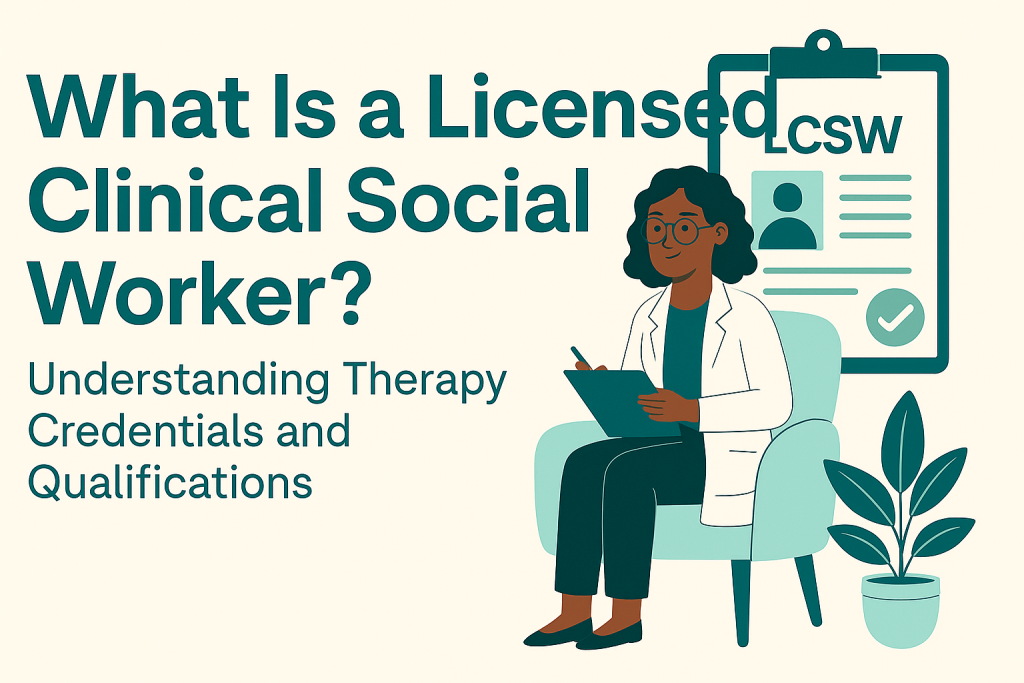
Licensed Clinical Social Worker (LCSW): The Complete Picture
An LCSW is a mental health professional who has completed a Master of Social Work (MSW) degree, accumulated thousands of hours of supervised clinical experience, and passed rigorous licensing exams. What distinguishes LCSWs is their person-in-environment perspective—they're trained to understand individuals within their broader social, economic, and cultural contexts.
The LCSW Licensing Journey
Bachelor's Degree
Typically a Bachelor of Social Work (BSW) or related field like psychology or sociology. Some programs accept diverse undergraduate backgrounds.
Master of Social Work (MSW)
2-year graduate program including coursework in social work theory, research methods, policy, and extensive field placements (900+ hours of supervised practice).
Supervised Clinical Hours
Post-graduation, candidates must complete 2-3 years (3,000+ hours) of supervised clinical experience under an already-licensed clinical social worker.
Licensing Examinations
Must pass the Association of Social Work Boards (ASWB) Clinical Level examination, which tests clinical knowledge, ethics, and intervention skills.
Comparing Mental Health Credentials: A Detailed Breakdown
| Credential | Education | Focus & Philosophy | Treatment Scope |
|---|---|---|---|
| LCSW Licensed Clinical Social Worker |
MSW + 2-3 years supervision | Person-in-environment, systems theory | Therapy, diagnosis, advocacy |
| LMHC / LPC Licensed Mental Health Counselor |
Master's in Counseling + 2-3 years | Holistic wellness, development across lifespan | Therapy, diagnosis, treatment planning |
| LMFT Licensed Marriage & Family Therapist |
Master's in MFT + 2-3 years supervision | Systems theory, relational dynamics | Couples, family, and individual relational therapy |
| PhD/PsyD Psychologist |
Doctoral degree (5-7 years) + 1-2 years | Scientific-practitioner model, research | Therapy, psychological testing, diagnosis |
| Psychiatrist MD/DO |
Medical degree + 4-year residency | Medical model, biological psychiatry | Medication management, diagnosis |
Important Note: All these licensed professionals (excluding psychiatrists whose primary focus is medication) are qualified to provide psychotherapy. The differences lie in their training philosophy and areas of emphasis rather than overall competence. Research shows that the therapeutic relationship matters more than the specific credential for most common mental health concerns.
What LCSWs Specialize In
Trauma-Informed Care
LCSWs receive extensive training in understanding how trauma affects individuals and systems, making them particularly skilled in treating complex trauma and PTSD.
Systems Intervention
Their training in understanding family dynamics, workplace systems, and community resources helps clients navigate complex environmental challenges.
Crisis Intervention
With background in hospital and community mental health settings, many LCSWs specialize in urgent mental health situations and stabilization.
Life Transitions
Their developmental perspective makes LCSWs particularly effective in helping clients navigate major life changes, grief, and adjustment issues.
How to Verify a Therapist's Credentials
Every state has an online license verification system. For LCSWs in New York, visit the NYS Office of Professions website to verify current licensure status and any disciplinary history.
Ensure the therapist graduated from an accredited program. For LCSWs, this should be a Council on Social Work Education (CSWE) accredited Master of Social Work program.
Many therapists pursue additional certifications in modalities like CBT, EMDR, or DBT. Verify these through the certifying organizations' websites.
Red Flags to Watch For
Warning Signs in Therapist Credentials:
- Unverifiable credentials or degrees from unaccredited ("diploma mill") institutions.
- Refusal to discuss training background or therapeutic approach openly.
- Claims of "special certification" that cannot be verified through legitimate national organizations.
- Lapsed or suspended license that they try to explain away.
Trustworthy therapists are transparent about their credentials and welcome questions about their qualifications.
Making Your Decision: Credentials vs. Personal Fit
While understanding credentials is crucial, research shows that personal fit with your therapist is the strongest predictor of successful treatment outcomes. Consider both factors when making your decision:
Consider Their Specialization
Look beyond credentials to specific experience with your concerns—whether that's navigating bipolar disorder, relationship issues, or trauma recovery.
Evaluate Therapeutic Approach
Different therapists use different methods (CBT, psychodynamic, humanistic). Consider what approach aligns with your preferences and needs.
Assess Personal Connection
The most important factor is whether you feel heard, understood, and comfortable with the therapist during your initial sessions.
Ready to find the right fit?
We ensure all our providers are fully licensed and thoroughly vetted, so you can focus on finding the right personal connection.
Find Verified Therapists at TherapyDialFrequently Asked Questions About Therapy Credentials
Is one type of therapist better than others?
No single credential is inherently "better." Research shows that the therapeutic relationship and specific expertise matching your needs matter more than the letters after a therapist's name. The right therapist depends on your specific concerns, personality, and treatment preferences.
Can LCSWs prescribe medication?
With rare exceptions in specific states with additional, specialized training, LCSWs cannot prescribe medication. They typically collaborate with psychiatrists or primary care physicians for medication management while providing the psychotherapy component.
How does insurance view different credentials?
Most insurance plans cover therapy provided by LCSWs, LMHCs, LMFTs, and psychologists similarly. The key is whether the therapist is in-network with your specific plan, not their particular credential type. For providers looking to join panels, see our guide on NPI numbers.
What's the difference between LCSW and LMSW?
An LMSW (Licensed Master Social Worker) has completed their MSW but not the supervised clinical hours required for clinical independent practice. LCSWs can practice independently and run their own private practices, while LMSWs typically work under supervision.