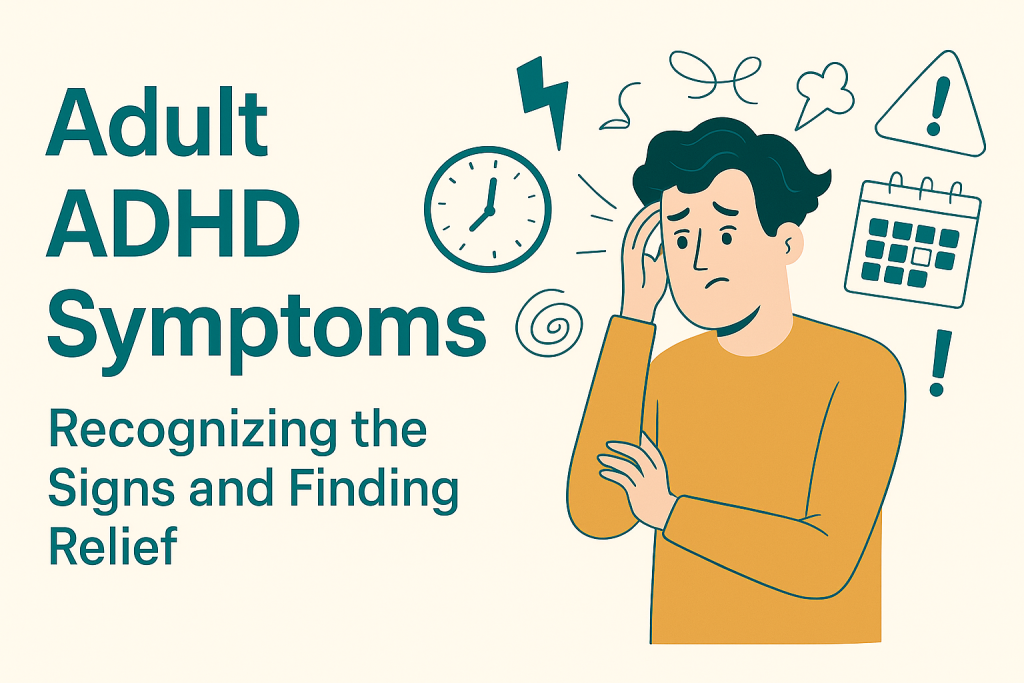
How to Recognize Adult ADHD Symptoms
- Inattentive Presentation — Difficulty sustaining attention, following detailed instructions, and organizing tasks.
- Hyperactive-Impulsive Presentation — Fidgeting, internal restlessness, excessive talking, and acting without considering consequences.
- Combined Presentation — Features of both inattentive and hyperactive-impulsive presentations (most common).
- Time Blindness — Struggling to accurately estimate how long tasks will take or frequently running late.
- Task Initiation Problems — Difficulty starting tasks, even important ones, despite understanding consequences.
- Working Memory Issues — Forgetting what you were about to do or losing track during conversations.
- Rejection Sensitive Dysphoria — Experiencing intense emotional pain in response to perceived criticism.
- Hyperfocus — Becoming so absorbed in interesting activities that you lose track of time and ignore basic needs.
ADHD is a neurodevelopmental condition, meaning it begins in childhood. However, many adults receive their first diagnosis later in life. Some individuals develop effective coping mechanisms in childhood that mask symptoms until adult demands exceed their capacity to compensate. According to CHADD, approximately 75% of adults with ADHD are undiagnosed.
Current research suggests ADHD is actually underdiagnosed in adults, particularly in women and people of color. Many adults who meet diagnostic criteria have never been evaluated. However, proper assessment by qualified professionals is essential to distinguish ADHD from conditions with similar symptoms.
While both can involve difficulty concentrating, the root causes differ. In anxiety, distraction stems from worry and catastrophic thinking. In ADHD, distraction occurs even in the absence of anxiety. However, the conditions frequently co-occur—about 50% of adults with ADHD also have an anxiety disorder. You can take an anxiety screening test to learn more.
When taken as prescribed under medical supervision, ADHD medications have low abuse potential for people with ADHD. In fact, appropriate medication treatment may actually reduce the risk of substance abuse by addressing the underlying impulsivity and reward-seeking behaviors associated with ADHD.
Medication is one effective tool among many. While it’s the most researched treatment, some adults manage symptoms successfully through behavioral strategies, therapy, coaching, and lifestyle adjustments alone. The decision to use medication should be made collaboratively with a healthcare provider.
Have you ever found yourself sitting down to work, only to realize an hour has passed and you’ve accomplished nothing but scrolling through social media, checking emails, and organizing your desk for the third time? Or maybe you’ve walked into a room and completely forgotten why you went there, despite having a clear purpose just moments before? If this sounds familiar, you might be experiencing adult ADHD symptoms that have gone unrecognized for years.
As a mental health professional who’s worked with hundreds of adults navigating ADHD diagnosis later in life, I’ve seen how transformative proper identification and treatment can be. Unlike childhood ADHD, which often presents as hyperactivity and impulsivity, adult ADHD symptoms frequently manifest as internal restlessness, chronic disorganization, and emotional dysregulation. If you suspect you may have ADHD, consider taking our Free ADHD Self-Assessment to better understand your symptom patterns.
The Three Presentations of Adult ADHD (DSM-5)
According to the DSM-5, ADHD has three primary presentations that can look quite different in adults compared to children. For clinicians treating these presentations, proper ADHD ICD-10 coding is essential.
Inattentive Presentation
Difficulty sustaining attention, following detailed instructions, and organizing tasks. Often appears as daydreaming, forgetfulness, and careless mistakes.
Real-Life Example
“I can start five different projects in one afternoon but struggle to complete any of them. My home is filled with half-finished crafts and partially read books.”
Hyperactive-Impulsive Presentation
Fidgeting, excessive talking, difficulty remaining seated, and acting without considering consequences. In adults, this often manifests as internal restlessness.
Real-Life Example
“I feel like there’s a motor running inside me all the time. I tap my feet during meetings and interrupt people without meaning to.”
Combined Presentation
Features of both inattentive and hyperactive-impulsive presentations. This is the most common type of ADHD.
Real-Life Example
“My mind races in ten directions at once, and my body needs to keep up. I’m simultaneously bored and overwhelmed by everything.”
Key Insight: The Hyperfocus Paradox
ADHD isn’t a deficit of attention—it’s a dysregulation of attention. Many adults with ADHD can hyperfocus for hours on tasks they find stimulating, while struggling to maintain focus on mundane responsibilities. This ability often confuses the diagnostic picture, but it’s actually a hallmark of the ADHD brain’s interest-based nervous system.
Effective Treatment Strategies for Adult ADHD
The most successful approach to managing adult ADHD typically involves multiple strategies working together, including understanding the ABC model of behavior analysis to identify triggers.
Medication Management
Stimulant and non-stimulant medications can significantly improve focus, impulse control, and emotional regulation for many adults with ADHD. This is often the first line of clinical treatment.
Cognitive Behavioral Therapy (CBT)
Therapy adapted for ADHD can help address negative thought patterns, emotional regulation, and coping skills. Learn more about how CBT compares to other modalities.
ADHD Coaching
Specialized coaching focuses on developing practical strategies for time management, organization, and productivity tailored specifically to the ADHD brain.
Environmental Adjustments
Creating consistent daily routines reduces decision fatigue. Designing physical and digital spaces to minimize distractions supports focus and task initiation.
When to Seek Professional Help
Consider pursuing an evaluation if you experience several of these symptoms consistently across multiple settings (work, home, social), and if they are interfering with your daily functioning or causing significant distress. According to the National Institute of Mental Health, early diagnosis and appropriate treatment can dramatically reduce the risks of secondary challenges like anxiety or depression.
Are You a Therapist Treating ADHD?
Let TherapyDial handle the administrative burden of running your practice so you can focus entirely on clinical care.
- ✓ Professional Medical Billing
- ✓ FREE Insurance Credentialing
- ✓ FREE TherapyDial Profile Listing
- ✓ Priority Practice Support