Table of Contents
- The Clinical Science of the Gut–Brain Axis
- Core Dietary Principles for Mood Stabilization
- Struggling with this?
- The 7-Day Depression & Gut Health Meal Plan
- Day 1: Probiotic & Omega-3 Foundation
- Day 2: Plant-Forward Fermentation
- Day 3: Polyphenols and Fiber
- Day 4: Balanced Comfort
- Day 5: Essential Fatty Acids
- Day 6: Batch Cook and Rest
- Day 7: Gentle Reset
- Navigating Low-Motivation Days and Grocery Runs
- Frequently Asked Questions
- Does changing my diet cure depression?
- Do I need an expensive probiotic supplement?
- What if I am too exhausted to even eat the “no-cook” options?
If you’ve ever stood in front of your fridge completely drained, knowing that what you eat impacts your mood but lacking the energy to cook, you are not alone. Navigating depression is exhausting, and the expectation to prepare complex, “healthy” meals can feel paralyzing. Yet, there is a profound, clinically validated connection between what we feed our microbiome and how our brain regulates emotion. This realistic, NYC nutritionist-approved 7-day meal plan is designed specifically to nourish your gut–brain axis with minimal friction, featuring low-effort swaps and bodega-friendly, no-cook fallbacks.
The Clinical Science of the Gut–Brain Axis
Your gut is home to trillions of microbes that are constantly communicating with your brain via the vagus nerve, immune system, and endocrine pathways. This bidirectional communication network is known as the gut–brain axis. Beneficial gut bacteria synthesize essential neurotransmitters, including a vast majority of the body’s serotonin, and produce short-chain fatty acids like butyrate that reduce systemic neuroinflammation.
When the microbiome is compromised—a state known as dysbiosis—it can exacerbate depressive symptoms, brain fog, and cognitive fatigue. According to clinical research published by the NIH, targeting the gut microbiome through targeted dietary adjustments offers a robust adjunctive pathway for mood regulation. Feeding your gut the right prebiotic fibers and probiotic cultures is a gentle, biological nudge toward mental stability.
Core Dietary Principles for Mood Stabilization
When depression narrows your bandwidth, you don’t need a rigid diet; you need a supportive framework. The Mediterranean dietary pattern—rich in diverse plants, healthy fats, and lean proteins—has been repeatedly shown to support psychiatric health. Here are the simple guidelines to follow:
- Pair Probiotics and Prebiotics: Combine live cultures (like kefir or yogurt) with fiber (like bananas or oats) to feed beneficial bacteria.
- Anchor Your Blood Sugar: Eat within two hours of waking to prevent blood glucose crashes, which can mimic or trigger anxiety and mood drops.
- Start Small: Introduce fiber and fermented foods gradually to avoid gastrointestinal distress. If you want to formally evaluate your current depressive symptoms before making lifestyle changes, try our free Depression Screening Test (PHQ-9) to establish a clinical baseline.
Struggling with this?
You don’t have to navigate this alone. Connect with a licensed therapist today.
Book a Free 15-Minute ConsultationThe 7-Day Depression & Gut Health Meal Plan
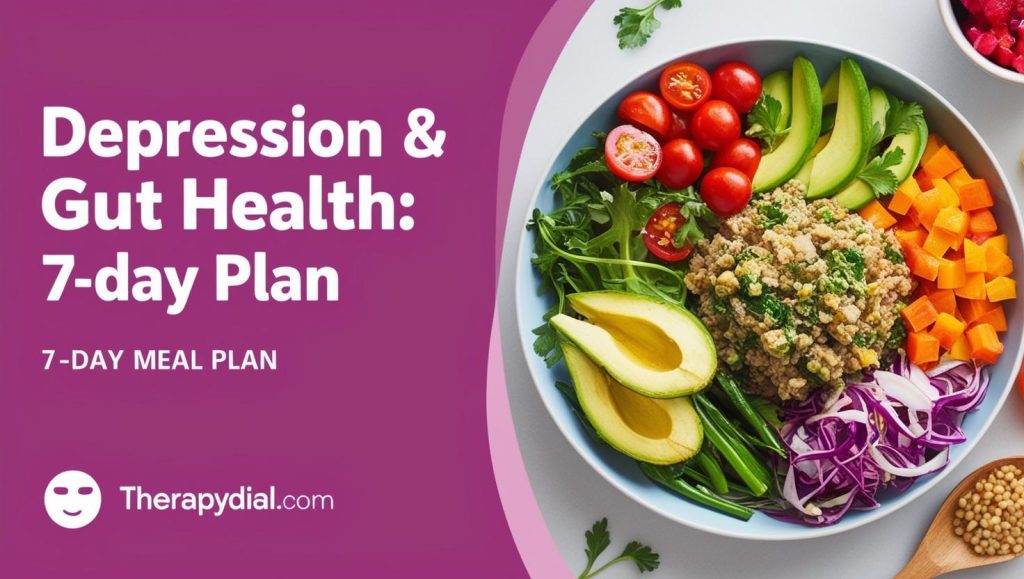
Perfection is the enemy of consistency, especially when you are depressed. For each day below, you will find a Cook option for when you have energy, a Low-Effort Swap for when you need a shortcut, and a No-Cook Backup for when assembling food is the absolute limit of your capacity.
Day 1: Probiotic & Omega-3 Foundation
Breakfast: Kefir smoothie with banana, oats, and flaxseed. Low-Effort Swap: A glass of drinkable kefir and a whole banana. No-Cook: Greek yogurt cup topped with chia seeds.
Lunch: Quinoa and chickpea tabbouleh dressed with extra virgin olive oil. Low-Effort Swap: Canned chickpeas over bagged pre-washed greens with vinaigrette. No-Cook: Shelf-stable lentil soup.
Dinner: Baked salmon, farro, and garlicky wilted greens. Low-Effort Swap: Tinned sardines or salmon with microwavable brown rice. No-Cook: Whole-grain wrap filled with store-bought hummus and arugula.
Day 2: Plant-Forward Fermentation
Breakfast: Overnight oats prepared with Greek yogurt, berries, and walnuts. Low-Effort Swap: Instant oatmeal made with hot water, topped with a dollop of yogurt. No-Cook: Pre-packaged yogurt and granola.
Lunch: Brown rice bowl featuring tofu, jarred kimchi, and cucumbers. Low-Effort Swap: Pre-baked tofu, microwavable rice, and a side of kimchi. No-Cook: Hummus snack box with baby carrots.
Dinner: Mediterranean tuna bowl with chickpeas, tomatoes, and herbs. No-Cook: The same ingredients, but omit the chopping—just mix canned tuna and beans.
Day 3: Polyphenols and Fiber
Breakfast: Whole-grain toast with ricotta, fresh berries, and a drizzle of honey. No-Cook: Yogurt with thawed frozen berries.
Lunch: Hearty lentil and vegetable soup with a side salad. Low-Effort Swap: Boxed low-sodium soup and mixed greens.
Dinner: Miso-ginger vegetable stir-fry over barley. Low-Effort Swap: Frozen stir-fry vegetable mix and microwavable barley.
Day 4: Balanced Comfort
Breakfast: Oatmeal stirred with peanut butter and banana. No-Cook: A banana, a nut-butter packet, and a yogurt cup.
Lunch: Chopped Mediterranean salad (cucumbers, tomatoes, feta, olives, chickpeas). Low-Effort Swap: A pre-chopped grocery store salad kit with added canned beans.
Dinner: Roasted chicken thighs, sweet potatoes, and broccoli. Low-Effort Swap: Store-bought rotisserie chicken, bagged slaw, and frozen sweet potato wedges.
Day 5: Essential Fatty Acids
Breakfast: Kefir, oats, and a dash of cinnamon blended into a shake. No-Cook: Yogurt and an instant oat packet.
Lunch: Whole-grain toast topped with sardines and lemon juice. Low-Effort Swap: Canned salmon if sardines are too pungent for your taste.
Dinner: Pasta e ceci (pasta with chickpeas and crushed tomatoes) and fresh spinach. Low-Effort Swap: High-quality canned minestrone soup.
Day 6: Batch Cook and Rest
Breakfast: Yogurt parfait layered with mixed berries and mixed nuts.
Lunch: Sheet-pan roasted vegetables with farro and a tahini drizzle. Make extra to save your energy tomorrow.
Dinner: Tofu or rotisserie chicken stuffed in a whole-grain pita with tzatziki and cucumber.
Day 7: Gentle Reset
Breakfast: Soft-scrambled eggs with sautéed greens and whole-grain toast. No-Cook: Cottage cheese and fresh fruit.
Lunch: Leftover sheet-pan vegetables and farro from Day 6, bulked up with extra beans.
Dinner: Simple baked white fish (or white beans drizzled with olive oil), quinoa, and steamed vegetables.
Navigating Low-Motivation Days and Grocery Runs
When depressive inertia sets in, taking a trip to the grocery store can feel like climbing a mountain. Give yourself permission to rely on bodega shortcuts and convenience items. Pre-washed greens, canned beans, microwaveable rice pouches, and drinkable yogurts are clinically valid ways to support your microbiome without exhausting your central nervous system.
If you find that low energy, chronic stress, or insomnia is blocking your progress, it may be time to incorporate therapeutic interventions alongside your nutritional changes. Explore our CBT tools for anxiety, insomnia, and more to help regulate your nervous system. For a comprehensive overview of clinical depression and its systemic effects, you can also refer to the National Institute of Mental Health (NIMH).
Frequently Asked Questions
Does changing my diet cure depression?
No single diet cures clinical depression. However, evidence-based nutritional patterns, like the Mediterranean diet, are strongly correlated with reduced depressive symptoms and lower neuroinflammation. Think of food as a foundational pillar that makes therapy, medication, and behavioral changes more effective.
Do I need an expensive probiotic supplement?
For most individuals, a “food-first” approach utilizing fermented foods like kefir, yogurt, kimchi, and miso is highly effective and more accessible. Introduce these foods slowly to allow your gastrointestinal tract time to adapt. Consult with your healthcare provider if you are considering high-dose supplementation.
What if I am too exhausted to even eat the “no-cook” options?
On your hardest days, the goal is simply caloric intake and stabilization. A spoonful of peanut butter, a handful of crackers, or a glass of milk is better than nothing. Treat yourself with profound self-compassion. Healing is non-linear, and surviving the day is sometimes enough.
Ready to Start Healing?
Request a free consultation with a licensed therapist.
Message Sent!
Thank you for contacting TherapyDial. We will get back to you within 24 hours.