
How to Start a Private Practice in Georgia
- Confirm Licensing — Verify your full LPC or LCSW via the Georgia Composite Board, as APCs cannot operate independently.
- Supervised Hours — Accumulate 3,000 post-master’s hours and 105 supervision hours to upgrade from APC.
- Pass Exams — Pass the NCE/NCMHCE and the Georgia Jurisprudence Exam for state laws and ethics.
- Business Entity — Register a standard LLC with the Georgia Secretary of State (no PLLC required).
- Obtain EIN — Secure a free EIN from the IRS and open a dedicated business banking account.
- NPI Registration — Register for your National Provider Identifier (NPI) on the NPPES portal.
- CAQH ProView — Complete your CAQH profile to prepare for commercial insurance panels like Anthem BCBS.
- Malpractice Insurance — Purchase minimum $1M/$3M coverage through carriers like HPSO or CPH & Associates.
- Insurance Credentialing — Apply to key payers like Anthem BCBS, Aetna, UnitedHealthcare, and GA Medicaid via GAMMIS.
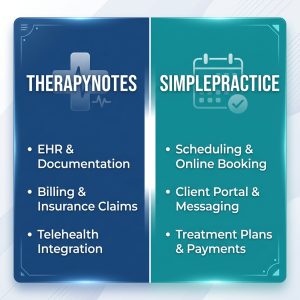
- Select Tech Stack — Choose a HIPAA-compliant EHR like SimplePractice or TherapyNotes, and secure communications like Spruce Health.
Frequently Asked Questions
Yes! Georgia is one of the more flexible states. Therapists can form a standard LLC — no PLLC or professional corporation is required. Filing costs approximately $100 with the Georgia Secretary of State.
No. Licensed Professional Counselors (LPCs), LCSWs, and LMFTs in Georgia cannot prescribe medications. Therefore, you do not need a DEA number. Only psychiatrists, psychiatric nurse practitioners, and qualified medical doctors can prescribe medication and require DEA registration.
The Georgia Composite Board requires 3,000 hours of post-master’s counseling experience over at least 2 years, with a minimum of 105 hours of clinical supervision. Your supervisor must hold an ACS or CPCS credential.
No. Associate Professional Counselors (APCs) cannot be self-employed or own a practice. You must complete 3,000 supervised hours and obtain full LPC licensure before practicing independently.
Yes. In addition to the NCE (or NCMHCE), Georgia requires a state-specific Jurisprudence Exam covering GA counseling laws and ethics.
Start with Anthem BCBS of Georgia (the dominant payer), then Aetna, UnitedHealthcare/Optum, and Cigna. For Medicaid, enroll via GAMMIS then join Peach State Health Plan.
Georgia is one of the fastest-growing therapy markets in the Southeast. Atlanta’s metro area alone has over 6 million residents, and much of rural Georgia is designated as a Mental Health Professional Shortage Area — creating massive demand for therapists willing to serve via telehealth. Factor in no franchise tax and a straightforward LLC formation process, and Georgia is one of the most practitioner-friendly states to launch a solo practice.
This guide walks you through each step — from navigating the Associate Professional Counselor (APC) pathway to credentialing with Anthem BCBS and Georgia Medicaid, ensuring you are fully compliant with the Georgia Composite Board.
Exploring other states? See our guides for New York, Texas, California, Florida, New Jersey, Pennsylvania, and Illinois.
How Georgia Compares to Other States
| Factor | Georgia | Florida | Texas | New York | Illinois |
|---|---|---|---|---|---|
| Entity Type | LLC / P.C. | LLC / PLLC | LLC / PLLC | PLLC only | PLLC / P.C. |
| State Income Tax | 5.49% flat | 0% | 0% | Up to 10.9% | 4.95% flat |
| Supervision Hours | 3,000 | 1,500 | 3,000 | Varies | 3,360 |
| Jurisprudence Exam | Yes | No | Yes | No | No |
| Credentialing Time | 90–120 days | 90–120 days | 60–120 days | 90–120 days | 90–120 days |
| Franchise Tax | None | None | Yes (report) | None | None |
The Complete Georgia Private Practice Roadmap
Confirm Your Georgia LPC License
Georgia’s licensing is governed by the Georgia Composite Board of Professional Counselors, Social Workers, and Marriage & Family Therapists. Verify your license status through the Georgia Secretary of State Licensing Lookup.
You must hold a full, unrestricted LPC, LMFT, or LCSW to operate an independent private practice. If you hold an Associate Professional Counselor (APC) credential, you cannot practice solo.
Need a Georgia License?
Whether you’re applying for initial licensure, transferring from another state, or navigating the APC-to-LPC pathway, we handle the paperwork and Board communications for you. → Ask About Licensure Assistance
Complete 3,000 Supervised Hours (APC to LPC)
As an Associate Professional Counselor (APC), you must accumulate:
- 3,000 total hours of post-master’s counseling experience (minimum 2 years).
- 105 hours of clinical supervision minimum.
- A Board-approved “Directed Experience Under Supervision” contract on file.
Supervisor Qualifications: Must hold an NBCC Approved Clinical Supervisor (ACS) or LPCAGA Certified Professional Counselor Supervisor (CPCS) credential.
Pass Your Licensing Exams
The Georgia Composite Board requires two exams for full LPC licensure:
- NCE (National Counselor Examination) or NCMHCE administered by NBCC.
- Georgia Jurisprudence Exam — covers state-specific counseling laws and ethics.
Your master’s degree program must have included at least 60 semester hours and a 600-hour supervised practicum/internship.
Form Your LLC (or P.C.)
Georgia allows therapists to form a standard LLC — no PLLC or special professional entity is required. This makes the corporate formation process much faster and cheaper.
- File Articles of Organization with the Georgia Secretary of State online (~$100).
- Designate a registered agent with a Georgia street address.
- File an Annual Registration ($50/year) to maintain your LLC in good standing.
Get Your EIN & Open Business Banking
Apply for a free EIN at the IRS website. Open a dedicated business checking account to keep your personal and practice finances strictly separated. Register with the Georgia Department of Revenue via the Georgia Tax Center (GTC) portal for state tax obligations.
Register Your NPI Numbers
The National Provider Identifier (NPI) is required for all HIPAA-covered billing. Register on the NPPES portal (National Plan and Provider Enumeration System).
You need a Type 1 NPI (Individual) for yourself and a Type 2 NPI (Organization) for your LLC.
Complete Your CAQH ProView Profile
CAQH ProView is a central repository used by commercial insurance companies to credential providers. You must thoroughly fill out your CAQH profile with your licensure, education, NPI, and work history. Grant access to all insurers and remember to re-attest every 120 days.
Secure Malpractice Insurance
Georgia Medicaid requires minimum coverage of $1M per occurrence / $3M aggregate. Commercial panels generally require the same $1M/$3M limits. Carriers like HPSO and CPH & Associates are highly rated. Expect to pay $200–$600/year.
Begin Insurance Credentialing
Georgia’s insurance landscape is anchored by Anthem. Key panels to target for the best volume:
- Anthem BCBS of Georgia — Dominant commercial payer
- Aetna — Strong nationwide presence
- UnitedHealthcare / Optum
- Cigna / Evernorth
- GA Medicaid — Enroll via GAMMIS, then credential through the state CVO
- Peach State Health Plan — Major Medicaid managed care organization
Expect credentialing to take 90–120 days per panel.
Set Up Your Tech Stack
Choose platforms that will sign a Business Associate Agreement (BAA) for HIPAA compliance.
SimplePractice or TherapyNotes
Scheduling, billing, telehealth, HIPAA portal.
Spruce Health
HIPAA-compliant phone, fax, messaging.
Lock Down Your Billing Strategy
Understanding exactly how to bill using standard CMS-1500 claims via your EHR or clearinghouse (like Waystar or Availity) is critical.
- CPT 90834 for 45-minute psychotherapy.
- CPT 90837 for 60-minute psychotherapy.
- Use accurate ICD-10-CM codes for diagnoses (e.g., F41.1 for GAD).
Ongoing Compliance & CEUs
- License Renewal: Biennial via the Georgia Secretary of State portal. Must complete 35 CE hours every two years via CE Broker.
- CAQH Attestation: Re-verify every 120 days.
- Tax Planning: Georgia has a flat 5.49% state income tax. Make quarterly estimated payments to both the IRS and GA Department of Revenue.

Georgia Break-Even Calculator
Estimate sessions per week to cover overhead and reach your income goal. GA state income tax is a flat 5.49%.
Exclusive Provider Bundle:
Licensure + Billing + Growth
- Professional Medical Billing
- FREE Insurance Credentialing
- FREE TherapyDial Profile Listing
- Priority Practice Support
Whether you need help getting a GA license or managing your claims. We handle the paperwork.
HIPAA Compliant & Expertly Managed.
Clinical Coding & Practice Resources
Ensure your documentation meets insurance standards for Georgia payers: