Table of Contents
- Understanding Bipolar Disorder and Mood Swings
- Common Symptoms: Riding the Emotional Waves
- Bipolar I vs. Bipolar II: Why the Distinction Matters
- The Science Behind Caffeine and Brain Chemistry
- Caffeine’s Ripple Effect on Neurotransmitters
- Struggling with this?
- The Connection Between Caffeine and Bipolar Mood Swings
- How Caffeine Worsens Depression and Sabotages Sleep
- The Role of Caffeine in Medication Efficacy
- 5 NYC Lifestyle Tips for Bipolar and Caffeine Management
- 1. Set Healthy, Sustainable Limits
- 2. Explore NYC’s Low-Caffeine and Alternative Cafés
- 3. Leverage Outdoor Mindfulness Spaces
- 4. Monitor Your Mood and Intake
- 5. Connect with Specialized Support
Understanding Bipolar Disorder and Mood Swings
Living with bipolar disorder involves navigating an unpredictable landscape of extreme mood shifts. These emotional fluctuations range from intense highs, known as mania or hypomania, to profound lows, recognized as depressive episodes. It’s far more complex than simply feeling “moody”—these swings can significantly impact every facet of daily life, including relationships, work, and overall well-being.
According to the National Institute of Mental Health (NIMH), approximately 2.8% of adults in the United States experience bipolar disorder in a given year. In a fast-paced environment like New York City, where the hustle never stops, these symptoms can feel even more magnified. When you introduce a powerful, everyday stimulant like caffeine into the mix, the balancing act becomes significantly more delicate.
Common Symptoms: Riding the Emotional Waves
Bipolar disorder doesn’t follow a one-size-fits-all script. During a manic or hypomanic phase, you might experience racing thoughts, an exaggerated sense of confidence, rapid speech, and a sharply decreased need for sleep. Conversely, depressive episodes can bring an overwhelming sense of emptiness, crippling fatigue, difficulty concentrating, and disrupted sleep patterns. Lifestyle factors—including stress levels, sleep hygiene, and caffeine consumption—often serve as critical triggers that can precipitate these shifts.
Bipolar I vs. Bipolar II: Why the Distinction Matters
Understanding your specific diagnosis is essential for effective symptom management. Bipolar I is characterized by full manic episodes that can be severe and long-lasting, sometimes requiring immediate medical intervention. Bipolar II involves hypomanic episodes—a less extreme form of mania—coupled with major depressive episodes.
Because these conditions manifest differently, caffeine’s impact can vary wildly. For someone with Bipolar I, a strong cup of coffee might be the catalyst that quickly pushes them toward a manic peak. For an individual with Bipolar II, that same cup could heighten anxiety or trigger insomnia, eventually plunging them into a depressive crash.
The Science Behind Caffeine and Brain Chemistry
Caffeine is the most widely consumed psychoactive substance in the world. It works its magic primarily by blocking adenosine, a neurotransmitter responsible for promoting sleep and relaxation. By temporarily shutting down these “tiredness” signals, caffeine keeps the brain alert and firing on all cylinders.
While this sounds like exactly what you need on a groggy Monday morning, it can be a recipe for disaster if you have a mood disorder. Caffeine doesn’t just block adenosine; it also triggers the release of dopamine—the “feel-good” chemical deeply involved in bipolar mood swings. This overstimulation of the central nervous system can easily mimic or exacerbate the agitation, racing thoughts, and impulsivity associated with a manic episode.
Caffeine’s Ripple Effect on Neurotransmitters
The neurochemical impact of caffeine doesn’t stop at dopamine. It also influences serotonin and norepinephrine, creating a chaotic environment in a brain that is already struggling to regulate its chemical messengers. This is particularly problematic because many individuals with bipolar disorder rely on mood stabilizers or antipsychotics to maintain neurochemical balance. Heavy caffeine intake can disrupt these delicate systems, leading to increased heart rate, severe anxiety, and energy crashes that leave you feeling more depleted than before.
Struggling with this?
You don’t have to navigate this alone. Connect with a licensed therapist today.
Book a Free 15-Minute ConsultationThe Connection Between Caffeine and Bipolar Mood Swings
Can a simple cup of coffee really trigger a mood episode? The short answer is yes. For someone teetering on the edge of mania or hypomania, high doses of caffeine can act like pouring gasoline on a spark. The sudden surge in energy and wakefulness can easily tip the scales into a full-blown manic state.
Moreover, caffeine-induced symptoms are frequently mistaken for spontaneous mood cycling. This confusion can lead to frustrating misdiagnoses or unnecessary adjustments to your psychiatric medications by well-meaning clinicians.
How Caffeine Worsens Depression and Sabotages Sleep
While reaching for an espresso during a depressive episode feels like throwing yourself a lifeline, it’s ultimately a short-term fix with long-term consequences. Once the initial stimulant buzz wears off, the resulting crash can intensify feelings of hopelessness, lethargy, and irritability.
Even more critically, caffeine severely degrades sleep quality. Consistent, restorative sleep is a foundational pillar of bipolar treatment. Because caffeine can remain in your system for up to 10 hours, that afternoon cold brew can easily lead to a restless night. Sleep deprivation is one of the most potent triggers for mood episodes. If you find yourself struggling with your sleep hygiene, exploring a dedicated bipolar 2 sleep guide can offer actionable steps to help reset your circadian rhythm.
The Role of Caffeine in Medication Efficacy
One of the most overlooked aspects of caffeine consumption is its ability to interfere directly with your psychiatric medications. Stimulants naturally counteract the calming mechanisms of mood stabilizers like lithium and valproate. According to the American Psychiatric Association (APA), managing bipolar disorder requires a highly individualized approach to both medication and lifestyle.
Research has shown that high caffeine intake can actually increase the renal clearance of lithium, meaning your body flushes the medication out faster than it should. This drops the concentration of the drug in your bloodstream, opening the door to unintended mood destabilization. Caffeine can also amplify the uncomfortable side effects of antipsychotics, such as tremors or heart palpitations.
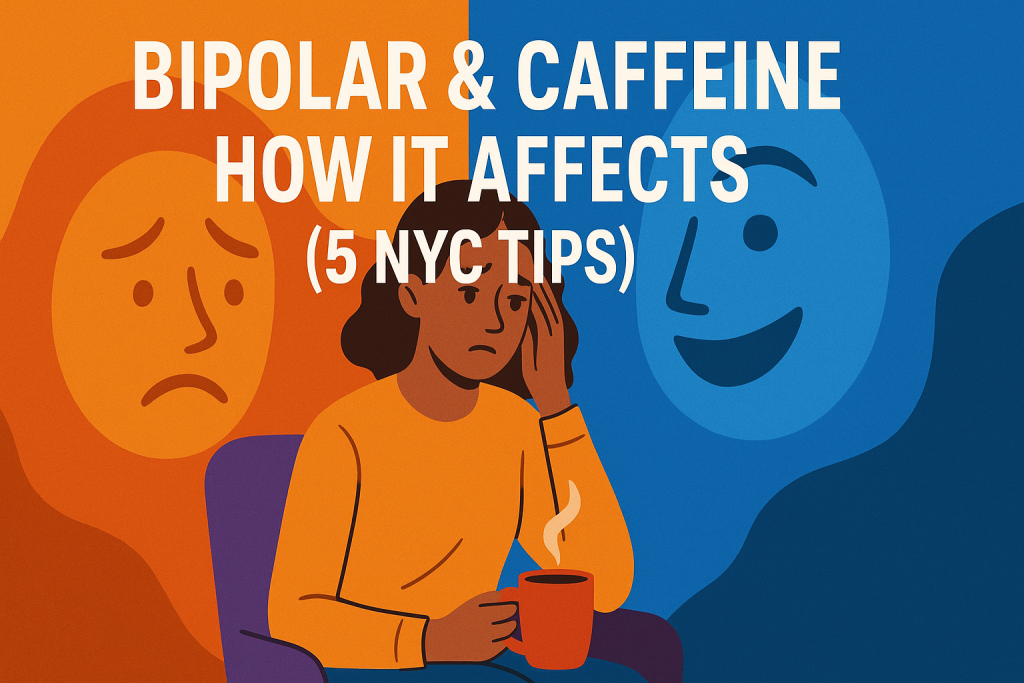
5 NYC Lifestyle Tips for Bipolar and Caffeine Management
If you live in New York City, coffee culture is baked into the daily routine. But managing bipolar disorder doesn’t mean you have to miss out. Here are five practical tips for balancing your mental health while navigating the city’s fast pace:
1. Set Healthy, Sustainable Limits
Quitting cold turkey isn’t always realistic. Instead, focus on setting strict boundaries. Many mental health professionals recommend capping caffeine at 200mg per day (roughly one cup of coffee) and enforcing a strict 2 p.m. cutoff to protect your sleep.
2. Explore NYC’s Low-Caffeine and Alternative Cafés
You can still enjoy the ritual of a café visit without the chemical spike. Seek out spots that specialize in golden turmeric lattes, adaptogenic teas with ashwagandha, or chicory-based coffee substitutes. These alternatives provide a comforting experience without putting your mood stability at risk.
3. Leverage Outdoor Mindfulness Spaces
Instead of reaching for an energy drink when you hit a midday slump, step outside. NYC offers incredible green spaces like the High Line, the Brooklyn Botanic Garden, or the quiet trails of Central Park’s North Woods. A short, mindful walk can boost your energy naturally and help ground your nervous system.
4. Monitor Your Mood and Intake
Awareness is your greatest tool. Keep a simple daily log tracking what you drink, how you sleep, and your mood on a scale of 1 to 10. Over time, these patterns will reveal precisely how your body reacts to different levels of stimulation, providing invaluable data for you and your psychiatrist.
5. Connect with Specialized Support
Finding a psychiatrist or therapy group that understands the nuanced relationship between lifestyle factors and bipolar disorder is essential. Look for specialized mood disorder clinics or local support groups where you can share strategies and feel understood by others who are navigating the exact same challenges.
Ready to Start Healing?
Request a free consultation with a licensed therapist.
Message Sent!
Thank you for contacting TherapyDial. We will get back to you within 24 hours.