Table of Contents
- Understanding PTSD: A Brief Overview
- What Is PTSD?
- Common Causes and Symptoms
- Eye Movement Desensitization and Reprocessing (EMDR)
- How EMDR Works
- Benefits and Clinical Evidence
- Struggling with this?
- The Role of Service Dogs in PTSD Treatment
- How Service Dogs Support Recovery
- NYC Programs for PTSD Service Dogs
- Navigating Local Therapy and Support in NYC
- Community Mental Health Clinics
- Specialized PTSD Support Groups
- Choosing the Right Treatment Path
- Innovative Treatments and Long-Term Recovery
- Frequently Asked Questions
Living in a fast-paced, high-stress city like New York can be overwhelming on its best days. For individuals living with post-traumatic stress disorder (PTSD), the constant noise, shoulder-to-shoulder crowds, and unpredictability of the five boroughs can make daily life feel entirely unmanageable.
Fortunately, NYC is also home to some of the world’s most advanced, evidence-based treatments and compassionate support systems for trauma survivors. From leading-edge EMDR therapy to dedicated service dog programs and accessible community clinics, the help you need is closer than you think.
In this guide, we will explore the comprehensive landscape of PTSD treatment in New York City and provide actionable steps to help you or your loved one reclaim peace of mind.
Understanding PTSD: A Brief Overview
What Is PTSD?
Post-Traumatic Stress Disorder (PTSD) is a clinically recognized mental health condition that develops after an individual experiences or witnesses a terrifying, life-threatening event. This can include military combat, physical or sexual assault, severe accidents, or natural disasters. It is crucial to understand that PTSD is not a sign of emotional weakness; it is a profound neurobiological response to trauma that requires specialized care, as outlined by the National Institute of Mental Health (NIMH).
Common Causes and Symptoms
In a diverse metropolis like NYC, PTSD affects a wide range of individuals—from veterans and first responders to domestic violence survivors and refugees. Common clinical symptoms include:
- Intrusive flashbacks or involuntarily reliving the traumatic event
- Chronic nightmares and severe insomnia
- Intense feelings of fear, unwarranted guilt, or profound shame
- Social withdrawal, emotional numbness, and avoidance behaviors
- Hyper-vigilance, irritability, and an exaggerated startle response
- Somatic (physical) symptoms such as unexplained headaches and chronic fatigue
Because trauma manifests differently in everyone, finding tailored, culturally competent care is essential.
Eye Movement Desensitization and Reprocessing (EMDR)
How EMDR Works
Eye Movement Desensitization and Reprocessing (EMDR) is a premier psychotherapy technique originally developed in the late 1980s by Dr. Francine Shapiro. Highly endorsed by clinical bodies for treating PTSD, EMDR helps the brain reprocess trapped, disturbing memories so they no longer trigger intense emotional or physical distress.
During a session, a trained therapist guides the patient through bilateral stimulation—typically using guided side-to-side eye movements, auditory tones, or physical tapping. This process helps the brain “digest” the traumatic memory, integrating it with more adaptive, grounding thoughts.
If you are exploring therapies for specific past traumas, you may find our deep dive into EMDR for childhood trauma particularly enlightening.
Benefits and Clinical Evidence
Extensive clinical trials and guidelines from the American Psychological Association (APA) highlight EMDR as a highly efficacious, non-invasive, and medication-free intervention that can yield rapid results. It is particularly effective for those who find it difficult or re-traumatizing to verbally articulate the details of their abuse or trauma.
Struggling with this?
You don’t have to navigate this alone. Connect with a licensed therapist today.
Book a Free 15-Minute ConsultationThe Role of Service Dogs in PTSD Treatment
How Service Dogs Support Recovery
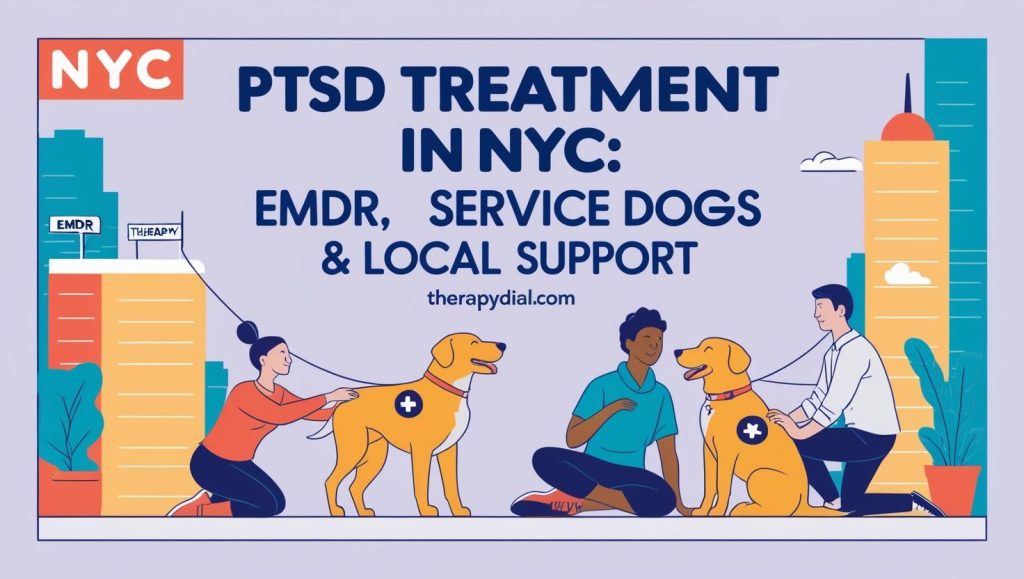
Imagine experiencing acute panic in a crowded subway station, only to have a highly trained service dog gently nudge you, breaking the cycle of a panic attack. PTSD service dogs are life-changing companions trained to perform specific medical tasks that mitigate the debilitating symptoms of trauma.
These remarkable animals do much more than provide emotional comfort. They are trained to:
- Wake their handler from severe night terrors
- Create physical boundaries in crowded spaces
- Guide their handler to an exit during a dissociative episode
- Provide deep pressure therapy (DPT) to regulate the nervous system during heightened anxiety
NYC Programs for PTSD Service Dogs
New York City and the surrounding areas host several excellent organizations dedicated to matching trauma survivors with trained service animals. Programs like Paws of War and K9s For Warriors have dramatically improved the quality of life for both veterans and civilian trauma survivors, providing an unparalleled sense of safety and independence.
Navigating Local Therapy and Support in NYC
Community Mental Health Clinics
Cost should never be a barrier to life-saving psychiatric care. New York City boasts a robust network of community health clinics offering accessible, trauma-informed care. Facilities run by NYC Health + Hospitals and organizations like The Institute for Family Health provide sliding-scale or fully subsidized treatments, including Cognitive Behavioral Therapy (CBT), EMDR, and comprehensive psychiatric evaluations.
Specialized PTSD Support Groups
Healing happens in community. Engaging with individuals who intuitively understand your experiences can immensely accelerate your recovery. From veteran-specific circles at the VA NY Harbor Healthcare System to trauma survivor groups managed by Safe Horizon, NYC offers both physical and virtual spaces that foster deep, judgment-free connections.
Choosing the Right Treatment Path
Selecting an effective PTSD treatment plan is an intensely personal journey. You must weigh factors such as the severity of your symptoms, your cultural background, financial accessibility, and the specific nature of the trauma. To ensure you are working with the right clinician, read our comprehensive guide on finding the best trauma therapist in NYC.
Innovative Treatments and Long-Term Recovery
Beyond traditional talk therapy, NYC is at the forefront of innovative interventions such as Virtual Reality Exposure Therapy (VRET) and Ketamine-Assisted Psychotherapy (KAP) for treatment-resistant PTSD. Remember that recovery is rarely a linear process. By building a robust support system, engaging in evidence-based treatments, and practicing self-compassion, you can reclaim your life from the shadows of trauma.
You are not alone. Reach out, explore your options, and take the definitive first step toward healing today.
Frequently Asked Questions
1. Is EMDR therapy covered by insurance in NYC?
Yes, many insurance networks in New York City cover EMDR when administered by a licensed mental health professional. It is always advised to verify specific coverage with your insurance provider.
2. Can non-veterans qualify for PTSD service dogs?
Absolutely. While several prominent organizations focus on veterans, there are many programs designed to support civilian survivors of severe trauma.
3. What should I do during an acute PTSD crisis?
If you are in immediate distress, dial 988 for the Suicide & Crisis Lifeline, or contact NYC Well (1-888-NYC-WELL) for free, confidential, 24/7 support.
Ready to Start Healing?
Request a free consultation with a licensed therapist.
Message Sent!
Thank you for contacting TherapyDial. We will get back to you within 24 hours.