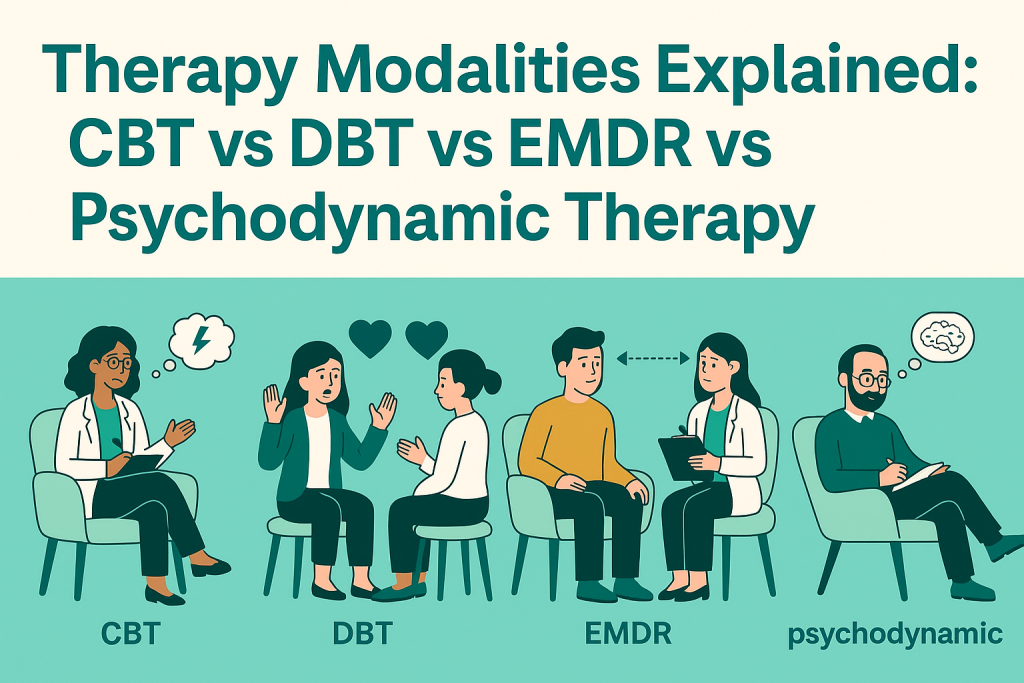
Have you ever left a therapy session wondering why your therapist asked you to track your thoughts, or why they focused on your childhood when you came in to talk about current anxiety? Understanding the different therapy approaches—what we call "modalities"—can transform your therapeutic experience from confusing to empowering.
As a clinical supervisor who has trained therapists in multiple modalities for over a decade, I've seen how understanding these approaches helps clients become active participants in their healing. The truth is, no single therapy approach works for everyone, and the best therapists often integrate techniques from multiple modalities based on your unique needs. This guide will demystify the most common therapy approaches and help you understand what to expect from each.
Cognitive Behavioral Therapy (CBT): The Gold Standard
CBT is based on the fundamental principle that our thoughts, feelings, and behaviors are interconnected, and that changing negative thought patterns can lead to changes in feelings and behaviors. It's typically short-term and goal-oriented, focusing on present problems rather than extensive exploration of the past.
Key Techniques in CBT
Cognitive Restructuring
Identifying and challenging negative automatic thoughts and cognitive distortions that contribute to emotional distress.
Behavioral Activation
Increasing engagement in positive activities to combat depression and improve mood through action.
Exposure Therapy
Gradual, controlled exposure to feared situations to reduce anxiety and avoidance behaviors.
Thought Records
Keeping written records of situations, thoughts, emotions, and evidence to challenge thinking patterns.
Dialectical Behavior Therapy (DBT): Skills for Emotional Regulation
DBT was originally developed for borderline personality disorder but has since proven effective for various conditions involving emotional dysregulation. It combines cognitive-behavioral techniques with mindfulness and acceptance strategies, emphasizing the "dialectical" balance between acceptance and change.
Core DBT Modules
Mindfulness
Learning to observe, describe, and participate without judgment in the present moment.
Distress Tolerance
Developing skills to survive crisis situations without making things worse.
Emotion Regulation
Understanding and naming emotions, reducing vulnerability, and increasing positive emotions.
Interpersonal Effectiveness
Maintaining relationships and self-respect while achieving objectives in social situations.
EMDR Therapy: Processing Traumatic Memories
EMDR is a specialized approach designed specifically to process traumatic memories. Unlike traditional talk therapy, it uses bilateral stimulation (eye movements, taps, or sounds) to help the brain reprocess disturbing memories, reducing their emotional intensity.
The EMDR Process
History Taking
Comprehensive assessment of trauma history and identifying target memories for processing.
Preparation
Establishing therapeutic relationship and teaching coping skills for emotional regulation.
Assessment
Identifying specific aspects of target memory including image, negative belief, and body sensation.
Desensitization
Using bilateral stimulation to process the memory until it no longer causes distress.
Psychodynamic Therapy: Exploring Deep Patterns
Psychodynamic therapy focuses on understanding how unconscious processes and past experiences shape current behavior and relationships. Unlike the stereotype of lying on a couch for years, modern psychodynamic therapy can be time-limited and focused on specific goals.
Key Psychodynamic Concepts
Transference
Exploring how feelings from past relationships are projected onto current relationships, including the therapist.
Defense Mechanisms
Identifying unconscious psychological strategies used to cope with reality and maintain self-image.
Free Association
Speaking freely without censorship to access unconscious thoughts and feelings.
Interpretation
Therapist helps client understand unconscious meanings behind thoughts, feelings, and behaviors.
Comparative Analysis: Which Approach When?
| Modality | Session Structure | Therapist Role | Homework | Evidence Strength |
|---|---|---|---|---|
| CBT | Structured agenda, skill-building | Teacher, coach | Regular practice assignments | Strong for most common disorders |
| DBT | Skills group + individual therapy | Coach, validator | Daily diary cards, skill practice | Strong for emotion dysregulation |
| EMDR | 8-phase protocol | Facilitator, guide | Minimal between sessions | Strong for trauma/PTSD |
| Psychodynamic | Less structured, exploratory | Interpreter, observer | Reflection, not formal homework | Moderate for relational issues |
Clinical Reality: Most skilled therapists today practice integration—blending techniques from multiple modalities based on client needs. A therapist might use CBT techniques for anxiety management while incorporating psychodynamic insights about relationship patterns. The best approach depends on your specific concerns, personality, and goals.
Matching Modalities to Specific Concerns
Anxiety Disorders
Generalized anxiety, panic disorder, social anxiety, specific phobias
Depression
Major depression, persistent depressive disorder, seasonal affective disorder
Trauma & PTSD
Post-traumatic stress, complex trauma, childhood abuse
Relationship Issues
Couples conflict, family dynamics, interpersonal patterns
Personality Disorders
Borderline, narcissistic, avoidant personality patterns
OCD & Related
Obsessive-compulsive disorder, BFRBs, hoarding
Making Your Decision: A Practical Guide
Questions to Consider When Choosing a Therapy Approach
Your Goals
Are you seeking symptom relief, personal insight, skill development, or trauma processing? Different modalities excel at different goals.
Time Commitment
How long are you willing to commit to therapy? CBT and solution-focused approaches tend to be shorter-term.
Learning Style
Do you prefer structured skill-building or exploratory conversation? Your learning style affects which approach will feel most comfortable.
Therapist Relationship
Consider whether you want a directive coach-style therapist or a more reflective, interpretive style.
Professional Recommendation: I always advise clients to focus less on choosing the "perfect" modality and more on finding a skilled therapist they connect with. A good therapist will adjust their approach based on your needs and may use techniques from multiple modalities throughout your work together.
Common Questions About Therapy Approaches
Evidence-Based Practice: The American Psychological Association defines evidence-based practice as integrating the best available research with clinical expertise and patient characteristics. This means the most effective therapy considers what research supports while also adapting to your unique needs and preferences.
Emerging and Niche Modalities
Acceptance and Commitment Therapy (ACT)
Focuses on psychological flexibility, mindfulness, and value-based living rather than symptom elimination.
Internal Family Systems (IFS)
Views the mind as composed of multiple "parts" and works to heal wounded parts and restore balance.
Somatic Therapies
Addresses how trauma and stress are stored in the body, incorporating movement and body awareness.
About Our Editorial Team
Author: TherapyDial Clinical Supervision Team - Our clinical directors and supervisors have advanced training and certification in multiple evidence-based therapy modalities including CBT, DBT, EMDR, and psychodynamic approaches.
Reviewer: Dr. Sarah Johnson, PhD - Licensed psychologist with specialized training in trauma therapies and 12 years of experience implementing and researching evidence-based treatment approaches.