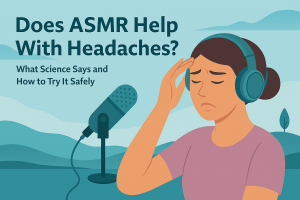
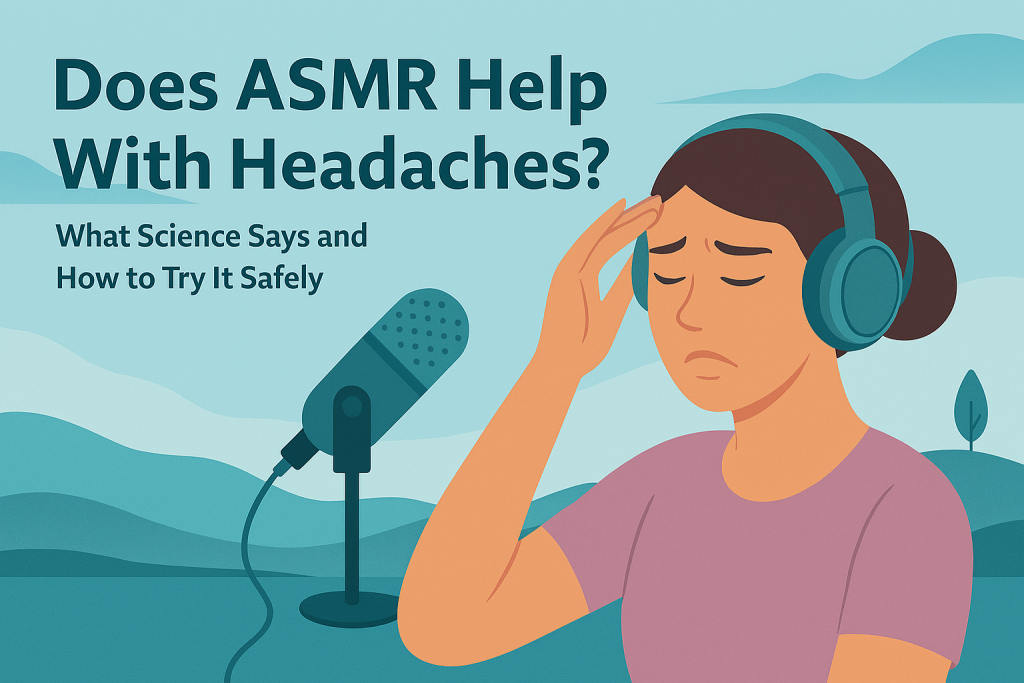
ASMR has gone viral as a sleep and stress remedy — but can it really help with headaches or migraines? Here’s what the research shows, what it doesn’t show yet, and how to try ASMR safely for relief.
Headaches are among the most common neurological complaints worldwide. Whether caused by stress, sleep deprivation, posture, hormonal changes, sensory overload, or underlying medical conditions — they are disruptive, painful, and often chronic.
As people look for more natural, non-pharmacological solutions, one method gaining momentum is ASMR (Autonomous Sensory Meridian Response) — the tingling, calming sensation triggered by soft sounds, whispering, and gentle movements.
But here’s the question: does ASMR actually help headaches, or is it just internet hype?
The short answer: There is no clinical proof that ASMR cures headaches or migraines. But — early research and physiological data suggest its impact on stress, muscle tension, sleep, and pain modulation make it a promising complementary approach.
What Is ASMR and Why Does It Matter for Headaches?
ASMR refers to a sensory phenomenon where a person experiences tingling sensations — typically starting at the scalp and moving down the neck and spine — accompanied by feelings of deep relaxation, comfort, and mild euphoria.
Common ASMR triggers include:
- Soft whispering
- Gentle tapping, crinkling, or brushing sounds
- Slow hand movements and visual stimuli
- Role-play of personal attention (e.g., hair brushing, “spa” scenarios)
People often use ASMR to fall asleep, reduce anxiety, or regulate emotions. Others use it for focus, sensory comfort, or emotional grounding.
Clinical interest in ASMR has grown significantly. A 2018 PLOS One study found that ASMR reliably reduces stress and improves emotional state in people who experience it. (PLOS One)
What the Science Says: Can ASMR Impact Headache Pain?
To date, no randomized controlled trials have tested ASMR specifically as a treatment for headaches or migraines. That’s a big caveat.
However, research does show measurable effects on:
- Heart rate
- Mood regulation
- Nervous system activation
- Sleep quality
- Pain perception
1. Heart Rate and Stress Reduction
A University of Sheffield study found that ASMR reduced heart rate by an average of 3.41 beats per minute in responsive individuals — comparable to the effects of low-intensity meditation. (Sheffield Research)
Since stress and sympathetic arousal are major headache triggers, this matters.
2. Mood, Anxiety, and Emotional Regulation
Multiple studies show ASMR can reduce anxiety, sadness, and physiological arousal, especially in individuals prone to emotional distress.
Stress, rumination, and emotional overload are known contributors to tension headaches.
3. Pain Modulation
In surveys of chronic pain sufferers, many reported temporary pain relief during or after ASMR exposure. (Medical News Today)
Hypothesis: ASMR may activate reward pathways, altering how the brain processes sensory discomfort — similar to music therapy or guided relaxation.
4. Sleep Improvement
Insomnia is one of the strongest predictors of recurring headaches and migraines.
Many individuals use ASMR nightly to fall asleep faster and sleep deeper, potentially decreasing headache frequency indirectly.
Why ASMR Might Help with Headaches: A Biological Perspective
Even without direct clinical trials, the mechanisms behind ASMR overlap with known headache triggers.
Stress Reduction & Muscle Relaxation
Stress activates the sympathetic nervous system, tightening muscles in the neck, scalp, and jaw. This can initiate or worsen headaches.
ASMR appears to downshift the nervous system into parasympathetic mode — meaning:
- Lower cortisol
- Looser muscles
- Reduced nerve tension
Neurochemical Effects
While understudied, ASMR likely increases:
- Dopamine
- Serotonin
- Oxytocin
These chemicals are linked to:
- Pain suppression
- Mood improvement
- Anxiety reduction
Attention Diversion
Immersive sensory experiences can shift focus away from pain — a strategy used in chronic pain rehabilitation.
How to Try ASMR for Headaches Safely: Practical Guide
If headaches are mild, stress-driven, or episodic, ASMR might help — when used strategically.
1. Choose Gentle Triggers
Best options:
- Soft whispering
- Slow tapping
- Crinkling
- Guided breathing
Avoid high-frequency, loud, or unpredictable sounds.
2. Use Headphones (When Tolerated)
But lower the volume — loud audio may aggravate symptoms.
3. Consider Visual ASMR
If sound is triggering, try slow visual motion without audio.
4. Pair ASMR With Physiological Care
- Hydration
- Neck stretching
- Screen breaks
- Gentle massage
5. Track Your Symptoms
- Frequency
- Intensity
- Triggers
- ASMR used
Patterns can reveal whether ASMR helps you — or not.
Risks, Limitations, and When to Avoid ASMR
ASMR is generally safe — but it’s not for everyone.
1. Sound Sensitivity / Misophonia
If specific sounds trigger anger, panic, or sensory overload, ASMR may worsen symptoms.
For help, see: Misophonia fixes
2. Migraine With Sensory Sensitivity
Bright visuals or unpredictable sounds may aggravate:
- Photophobia
- Phonophobia
3. Dependency & Habituation
Using ASMR nightly can lead to “tolerance,” reducing its effect.
4. Not a Replacement for Medical Care
Seek evaluation if headaches are:
- Severe or disabling
- Sudden and intense
- Associated with neurological changes
Related Guides You May Find Helpful
- Migraine Relief: 3 ASMR Techniques Backed By Science
- How ASMR Helps Social Anxiety
- Stress Management in NYC: Science-Backed Relief
When to Seek Professional Help
ASMR may help mild, stress-driven headaches — but professional support matters if headaches disrupt your life.
A mental health professional can help you address:
- Stress intolerance
- Sleep problems
- Anxiety
- Emotional triggers
Conclusion: Does ASMR Help Headaches?
ASMR likely doesn’t “cure” headaches — but it may help reduce symptoms by addressing biological and behavioral triggers:
- Stress
- Muscle tension
- Pain perception
- Sleep disturbances
For many, ASMR works best as a complementary strategy — alongside hydration, sleep hygiene, posture care, and mental health support.
If you're curious, experiment safely for 2–4 weeks, track your symptoms, and see if it makes a meaningful difference for you.
Your experience — not just the research — matters.
Frequently Asked Questions
Can ASMR cure headaches or migraines?
No. ASMR does not cure headaches — but may help reduce severity by lowering stress, improving sleep, and altering pain processing.
Can ASMR make headaches worse?
Yes. If you're sensitive to sound, bright light, or sensory input, ASMR may aggravate symptoms.
Do I need headphones?
No. Headphones can improve immersion, but are optional — and may worsen symptoms for sound-sensitive individuals.
Is ASMR safe for kids?
Generally yes, but content should be age-appropriate. See: Is ASMR Safe for Kids?