
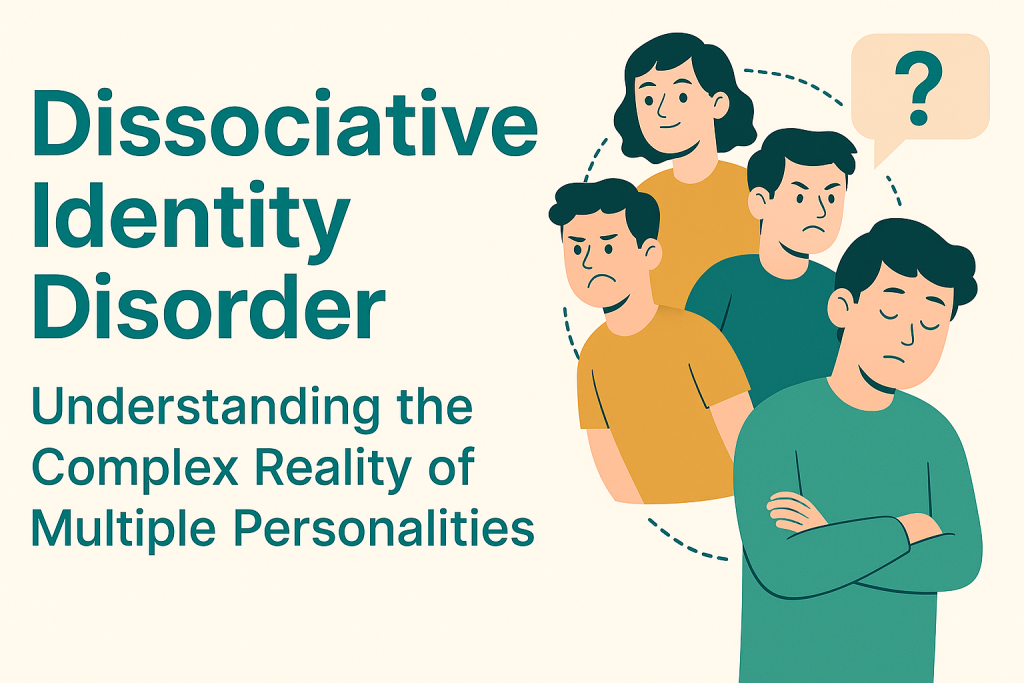
Dissociative Identity Disorder: Understanding the Complex Reality of Multiple Personalities

Dissociative Identity Disorder Understanding the Complex Reality of Multiple Personalities

Share This Post

Dissociative Identity Disorder: Understanding the Complex Reality of Multiple Personalities

Have you ever experienced that surreal feeling of "losing time"—glancing at a clock and realizing hours have passed without any memory of what happened?

For most people, this is a rare, unsettling occurrence. But for individuals with Dissociative Identity Disorder (DID), this experience is a daily reality that shapes their entire existence.

As a trauma specialist who's worked with DID for over a decade, I've witnessed how misunderstanding and media sensationalism have created a distorted picture of this complex condition.

The truth about DID is both more ordinary and more extraordinary than what's typically portrayed. It's not about dramatic personality shifts or criminal alter egos—it's about survival, adaptation, and the incredible ways the human mind protects itself from unbearable pain.

1.5% of the global population has Dissociative Identity Disorder, according to international studies

What is Dissociative Identity Disorder? A Clinical Definition

Dissociative Identity Disorder (DID) is a complex psychological condition characterized by the presence of two or more distinct personality states or identities that recurrently take control of an individual's behavior, accompanied by an inability to recall important personal information that is too extensive to be explained by ordinary forgetfulness.

Formerly known as Multiple Personality Disorder, DID represents a failure of integration of various aspects of identity, memory, and consciousness. It's important to understand that these "alternate identities" are not separate people sharing one body, but rather fragmented aspects of a single individual that developed separately as a coping mechanism.

Clinical Perspective: DID isn't about having multiple people inside one body—it's about one person whose consciousness fragmented during childhood trauma as a survival strategy. The different identity states represent compartmentalized aspects of experience, emotion, and memory that couldn't be integrated into a cohesive whole.

Official Diagnostic Criteria for DID

According to the DSM-5-TR, the following criteria must be met for a DID diagnosis:

A Disruption of identity characterized by two or more distinct personality states, which may be described in some cultures as an experience of possession. The disruption involves marked discontinuity in sense of self and agency, accompanied by related alterations in affect, behavior, consciousness, memory, perception, cognition, and/or sensory-motor functioning.
B Recurrent gaps in the recall of everyday events, important personal information, and/or traumatic events that are inconsistent with ordinary forgetting.
C The symptoms cause clinically significant distress or impairment in social, occupational, or other important areas of functioning.
D The disturbance is not a normal part of a broadly accepted cultural or religious practice.
E The symptoms are not attributable to the physiological effects of a substance or another medical condition.

Common Symptoms and Experiences

DID manifests through a complex constellation of symptoms that extend beyond the presence of alternate identities:

Amnesia and Memory Gaps

Inability to recall personal information, daily events, or traumatic experiences. Finding unfamiliar items in possession or being in places without remembering how one got there.

Depersonalization

Feeling detached from one's own mind, body, or emotions—as if watching oneself from outside. Sensations of numbness, unreality, or automation.

Derealization

Experiencing the external world as unreal, dreamlike, foggy, or visually distorted. Objects may appear larger, smaller, or two-dimensional.

Identity Confusion

Uncertainty about who one is, what one believes, or what one wants. Sudden shifts in preferences, skills, or knowledge.

Identity Alteration

The sense of being different people at different times, often with distinct names, ages, genders, or personal histories.

Inner Voices and Communication

Hearing conversations, arguments, or commentary from within one's mind. These are experienced as separate from one's own thoughts.

The Trauma Connection: How DID Develops

DID overwhelmingly develops as a response to severe, repetitive childhood trauma—typically beginning before age 6-9, during critical developmental periods when personality integration normally occurs. The dissociation serves as a psychological escape when physical escape is impossible.

Developmental Understanding: DID doesn't form from single traumatic events but from ongoing, inescapable abuse where dissociation becomes the primary survival strategy. The brain essentially compartmentalizes traumatic experiences to allow the child to function day-to-day, but these compartments become increasingly separate over time.

Common Trauma Types Associated with DID

  • Severe physical abuse that is repetitive and inescapable
  • Sexual abuse, particularly when perpetrated by caregivers
  • Emotional abuse and neglect that creates attachment trauma
  • Medical trauma involving painful procedures without comfort
  • Witnessing extreme violence toward family members
  • Early separation from primary caregivers

DID vs. Other Conditions: Understanding the Differences

DID is often misdiagnosed or confused with other mental health conditions. Here's how it differs:

Condition Key Features How It Differs from DID
Borderline Personality Disorder Identity disturbance, emotional dysregulation, fear of abandonment BPD involves identity confusion but not distinct alternate identities with amnesia barriers
Schizophrenia Psychosis, hallucinations, delusions, disorganized thinking DID does not involve psychosis; "voices" are experienced as internal identities
Bipolar Disorder Cycling between depressive and manic episodes Mood states in bipolar are continuous, while identity shifts in DID involve discontinuous consciousness
PTSD Flashbacks, avoidance, hyperarousal following trauma PTSD involves remembering trauma, while DID involves structural dissociation and amnesia
Other Specified Dissociative Disorder Dissociative symptoms that don't meet full DID criteria OSDD may involve identity disturbance without fully distinct alternate identities

Debunking Common Myths About DID

Myth: DID is rare or doesn't really exist

This misconception stems from both the secretive nature of the disorder and historical controversy in psychiatry.

Fact

DID affects approximately 1.5% of the population internationally—similar prevalence to PTSD and other trauma disorders. The research evidence for DID includes neuroimaging studies showing distinct brain activity patterns corresponding to different identity states.

Myth: People with DID are dangerous or violent

Media portrayals often sensationalize DID as involving "evil" alters or criminal behavior.

Fact

Individuals with DID are far more likely to be victims of violence than perpetrators. Most "protector" alters function to keep the system safe, not harm others. The vast majority of people with DID are law-abiding citizens who struggle with internal pain rather than external aggression.

Myth: DID is the same as schizophrenia

Public confusion often lumps these very different conditions together.

Fact

Schizophrenia involves psychosis (losing touch with reality), while DID involves dissociation (compartmentalization of consciousness). They have different causes, symptoms, and treatments. DID does not involve hallucinations or delusions in the same way schizophrenia does.

The Three-Phase Treatment Model for DID

Treatment for DID typically follows a phased approach that may take several years:

Phase 1: Safety and Stabilization

Establishing safety, developing coping skills, building therapeutic alliance, and creating internal cooperation. This phase focuses on managing symptoms, reducing self-harm, and developing emotional regulation skills. Techniques may include EMDR preparation and grounding exercises.

Phase 2: Trauma Processing and Integration

Gradually processing traumatic memories while maintaining stability. This involves helping identity states share memories, emotions, and experiences to reduce amnesia barriers. Integration may occur naturally as communication improves.

Phase 3: Identity Integration and Rehabilitation

Developing a more unified sense of self, learning to live without dissociative barriers, and building a meaningful life beyond trauma. This phase focuses on identity consolidation and future-oriented goals.

Evidence-Based Therapeutic Approaches

Psychotherapy is the primary treatment for DID, with several specialized approaches showing effectiveness:

  • Trauma-focused therapy adapted for complex dissociation
  • Dialectical Behavior Therapy (DBT) for emotion regulation
  • EMDR with modifications for structural dissociation
  • Internal Family Systems (IFS) adapted for DID systems
  • Cognitive Behavioral Therapy for addressing distorted beliefs

Medication may be used to address co-occurring conditions like depression or anxiety, but there are no medications specifically for DID itself.

Living with DID: Personal Perspectives

Supporting Someone with DID

If someone you care about has DID, here are ways to provide meaningful support:

Educate Yourself

Learn about DID from reputable sources to understand what your loved one experiences. Avoid media stereotypes and sensationalized portrayals.

Be Patient with Memory Gaps

Understand that amnesia is a symptom, not intentional forgetting. Gently remind without frustration when they don't remember conversations or events.

Respect All Identity States

Treat different parts with equal respect and dignity. They all serve important functions in the person's psychological survival.

Maintain Consistent Boundaries

Provide stability through predictable responses and clear boundaries, which helps reduce the need for dissociative coping.

Encourage Professional Treatment

Support their engagement with qualified therapists while respecting their autonomy in the treatment process.

Take Care of Yourself

Supporting someone with complex trauma can be challenging. Ensure you have your own support system and practice self-care.

Recovery Reality: While DID is a chronic condition, significant improvement is possible with appropriate treatment. Many individuals achieve functional integration—not necessarily the disappearance of identity states, but cooperative internal relationships that allow for a more cohesive experience of daily life.

Find Specialized DID Treatment at TherapyDial

Frequently Asked Questions About Dissociative Identity Disorder

Yes, children can be diagnosed with DID, though clinicians are typically cautious about diagnosing personality disorders in children. The diagnostic criteria are the same, but presentation may differ. Early intervention is crucial, as treatment during childhood and adolescence often has better outcomes than treatment beginning in adulthood.

The number varies widely—some individuals have just a few identity states, while others may have dozens or more. The average in clinical populations is between 8-15, but this number can fluctuate throughout treatment as awareness increases and fragmentation decreases. The focus in treatment is not on counting identities but on improving communication and cooperation.

Complete "cure" in the sense of the condition disappearing entirely is rare, but significant functional recovery is absolutely possible. The goal of treatment is typically integration—not necessarily the disappearance of identity states, but the development of cooperative internal relationships, reduced amnesia, and the ability to function effectively in daily life. Many people with DID achieve fulfilling relationships, careers, and quality of life with appropriate treatment.

While everyone experiences mild dissociation occasionally (like highway hypnosis or getting lost in a book), DID involves severe, chronic dissociation that impairs functioning. The key differences are the presence of distinct identity states with associated amnesia, the involuntary nature of the dissociation, and the significant distress or impairment it causes. Normal daydreaming doesn't involve losing time or finding evidence of actions you don't remember taking.

Many individuals with DID are unaware of their condition for years or decades, often attributing their symptoms to "blank spells," "forgetfulness," or other mental health conditions. The amnesia barriers between identity states can prevent awareness of the dissociation. Diagnosis typically comes after seeking help for depression, anxiety, or unexplained memory problems. Awareness usually develops gradually through treatment.

DID appears to affect people of all genders, ethnicities, and socioeconomic backgrounds, though some patterns have been observed in clinical samples. Women are diagnosed more frequently, which may reflect both actual higher prevalence and diagnostic bias. The disorder seems to occur across cultures worldwide, though cultural expressions of dissociation may vary. The common factor is severe childhood trauma rather than demographic characteristics.

DID treatment is generally long-term, often lasting 5-10 years or more, though significant improvement can occur within the first few years. The timeline depends on many factors including trauma history, stability of current life, quality of therapeutic relationship, and co-occurring conditions. Treatment proceeds at the pace the person can tolerate without becoming overwhelmed or destabilized.

There are no medications specifically for DID itself, but medications can help manage co-occurring symptoms like depression, anxiety, or PTSD symptoms. Antidepressants, anti-anxiety medications, or sometimes mood stabilizers may be prescribed based on individual needs. Medication should always be part of a comprehensive treatment plan that includes psychotherapy.

Look for therapists with specific training in complex trauma and dissociation. Credentials to look for include certification from the International Society for the Study of Trauma and Dissociation (ISSTD), experience with phase-oriented trauma treatment, and familiarity with structural dissociation theory. Be wary of therapists who promise quick fixes or seem fascinated by the "multiple personality" aspect rather than focused on healing.

Many people with DID lead fulfilling lives with relationships, careers, and families. "Normal" may look different—it often involves ongoing management of symptoms and continued therapeutic work—but quality of life can be excellent. Success typically involves finding the right treatment, developing effective coping strategies, building a strong support system, and cultivating self-acceptance of one's complex internal experience.

About Our Editorial Team

Author: TherapyDial Clinical Team - Our trauma specialists include therapists trained in complex dissociation and certified by the International Society for the Study of Trauma and Dissociation.

Reviewer: Dr. Rebecca Martinez, PhD - Clinical psychologist specializing in complex trauma and dissociative disorders with 15 years of experience treating DID using phase-oriented approaches.

Last updated: October 29, 2025

More To Explore