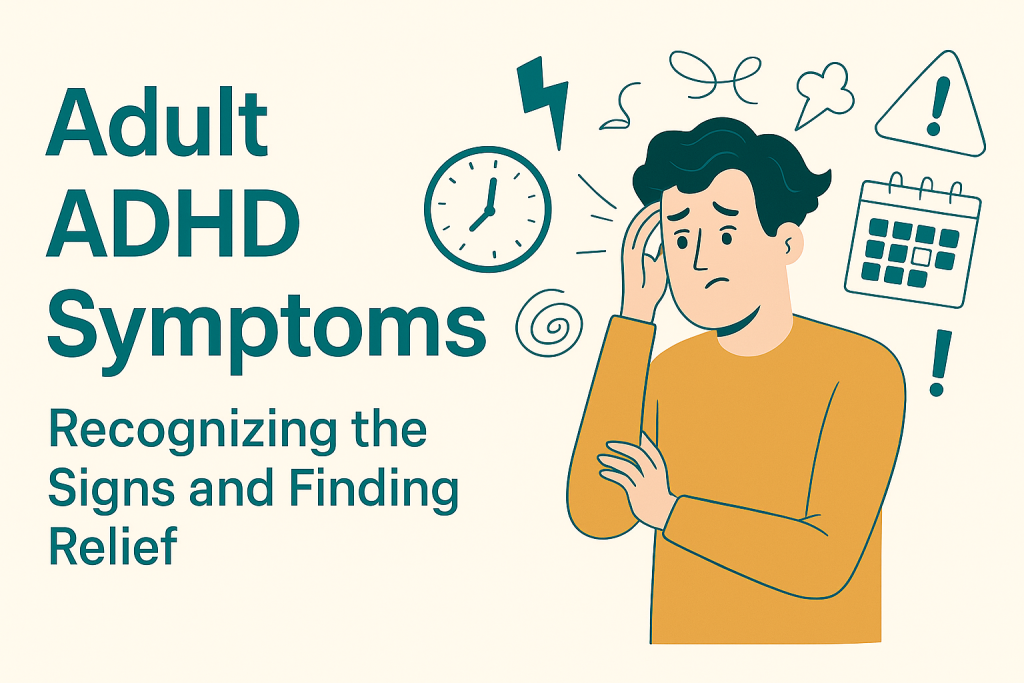
Adult ADHD Symptoms: Recognizing the Signs and Finding Relief
Have you ever found yourself sitting down to work, only to realize an hour has passed and you've accomplished nothing but scrolling through social media, checking emails, and organizing your desk for the third time? Or maybe you've walked into a room and completely forgotten why you went there, despite having a clear purpose just moments before? If this sounds familiar, you might be experiencing adult ADHD symptoms that have gone unrecognized for years.
As a mental health professional who's worked with hundreds of adults navigating ADHD diagnosis later in life, I've seen how transformative proper identification and treatment can be. Unlike childhood ADHD, which often presents as hyperactivity and impulsivity, adult ADHD symptoms frequently manifest as internal restlessness, chronic disorganization, and emotional dysregulation. The good news? Understanding these signs is the first step toward developing effective strategies that can dramatically improve your quality of life.
What Exactly is Adult ADHD?
Attention-Deficit/Hyperactivity Disorder (ADHD) is a neurodevelopmental condition that affects executive functions—the cognitive processes that help us plan, focus attention, remember instructions, and juggle multiple tasks successfully. While it begins in childhood, ADHD doesn't disappear with age. Approximately 60% of children with ADHD continue to experience significant symptoms into adulthood.
Many adults with undiagnosed ADHD have spent years developing coping mechanisms to mask their challenges, often at great personal cost. They might describe themselves as "lazy," "scatterbrained," or "underachievers"—completely unaware that they're dealing with a neurological condition, not a character flaw.
Key Insight: ADHD isn't a deficit of attention—it's a dysregulation of attention. Many adults with ADHD can hyperfocus for hours on tasks they find stimulating, while struggling to maintain focus on mundane responsibilities.
The Three Presentations of Adult ADHD
According to the DSM-5, ADHD has three primary presentations that can look quite different in adults compared to children:
Inattentive Presentation
Difficulty sustaining attention, following detailed instructions, and organizing tasks. Often appears as daydreaming, forgetfulness, and careless mistakes.
Hyperactive-Impulsive Presentation
Fidgeting, excessive talking, difficulty remaining seated, and acting without considering consequences. In adults, this often manifests as internal restlessness.
Combined Presentation
Features of both inattentive and hyperactive-impulsive presentations. This is the most common type of ADHD.
Common Adult ADHD Symptoms You Might Not Recognize
While everyone experiences occasional forgetfulness or distraction, ADHD symptoms in adults are persistent, pervasive, and significantly impact multiple areas of life. Here are some of the most common yet frequently missed signs:
Executive Function Challenges
Time Blindness
Struggling to accurately estimate how long tasks will take, frequently running late, or being unusually early due to anxiety about timing.
Task Initiation Problems
Difficulty starting tasks, even important ones, despite understanding the consequences of delay.
Working Memory Issues
Forgetting what you were just about to do, losing track during conversations, or walking into rooms and forgetting why.
Emotional Regulation Difficulties
Rejection Sensitive Dysphoria
Experiencing intense emotional pain in response to perceived criticism or rejection, even when none was intended.
Emotional Hyperarousal
Quickly becoming excessively angry, frustrated, or excited compared to others in similar situations.
Low Frustration Tolerance
Becoming easily overwhelmed by minor setbacks or inconveniences that others take in stride.
Focus and Attention Patterns
Hyperfocus
Becoming so absorbed in interesting activities that you lose track of time and ignore basic needs like eating or using the bathroom.
Distractibility
Easily pulled away from tasks by external stimuli or internal thoughts, making it difficult to maintain focus in meetings or conversations.
Mind Wandering
Frequently zoning out during routine tasks, finding your mind has drifted elsewhere without your conscious intention.
Personal Insight: Many of my clients initially dismiss their symptoms because they can focus intensely on video games, creative projects, or topics they're passionate about. This hyperfocus ability often confuses the diagnostic picture, but it's actually a hallmark of the ADHD brain's interest-based nervous system.
How Adult ADHD Differs From Everyday Forgetfulness
It's normal to occasionally misplace keys or forget an appointment. What distinguishes ADHD is the frequency, severity, and impact of these challenges:
| Symptom Area | Normal Experience | ADHD Experience |
|---|---|---|
| Forgetfulness | Occasionally forgetting where you put your phone | Regularly losing important items like wallets, keys, or phones multiple times per week |
| Time Management | Running late occasionally due to unexpected delays | Consistently underestimating time needed, leading to chronic lateness despite best efforts |
| Organization | Having a messy desk sometimes | Chronic disorganization across multiple life domains (home, work, digital files) despite repeated attempts to improve |
| Focus | Getting distracted during a boring meeting | Struggling to maintain focus during important conversations or tasks, even when motivated |
The Hidden Costs of Undiagnosed Adult ADHD
When ADHD symptoms in adults go unrecognized, they often lead to secondary challenges that compound over time:
Career Underachievement
Despite intelligence and capability, struggling with promotions, job changes, or meeting potential due to executive function challenges.
Relationship Strain
Partners may misinterpret symptoms as lack of care or effort, leading to recurring conflicts about forgetfulness, listening skills, or follow-through.
Financial Problems
Impulse spending, late fees from forgotten bills, and difficulty with long-term financial planning create ongoing stress.
Mental Health Concerns
Anxiety, depression, and low self-esteem often develop after years of struggling without understanding why.
Important: Research shows adults with untreated ADHD are significantly more likely to experience substance abuse, relationship instability, and financial difficulties. Early diagnosis and appropriate treatment can dramatically reduce these risks.
Getting Diagnosed: What to Expect
If you recognize yourself in these descriptions, pursuing a formal assessment can be life-changing. Here's what the diagnostic process typically involves:
Comprehensive Evaluation
A qualified professional (psychiatrist, psychologist, or specialized clinician) will conduct a detailed interview about your current challenges, childhood history, and symptom patterns across different settings.
Symptom Assessment
Using standardized rating scales and diagnostic criteria, the clinician will evaluate whether your symptoms meet the threshold for ADHD and rule out other conditions with similar presentations.
Collateral Information
Whenever possible, clinicians seek information from childhood records or speak with family members to establish that symptoms were present before age 12 (a diagnostic requirement).
Differential Diagnosis
The clinician will consider whether symptoms might be better explained by other conditions like anxiety, depression, sleep disorders, or thyroid problems.
Effective Treatment Strategies for Adult ADHD
The most successful approach to managing adult ADHD typically involves multiple strategies working together:
Professional Interventions
Medication
Stimulant and non-stimulant medications can significantly improve focus, impulse control, and emotional regulation for many adults with ADHD.
ADHD Coaching
Specialized coaching focuses on developing practical strategies for time management, organization, and productivity tailored to the ADHD brain.
Therapy
Cognitive Behavioral Therapy (CBT) adapted for ADHD can help address negative thought patterns, emotional regulation, and coping skills. Explore our CBT therapy options for more information.
Lifestyle and Environmental Adjustments
Structure and Routines
Creating consistent daily routines reduces decision fatigue and executive function demands.
Environmental Modifications
Designing physical and digital spaces to minimize distractions and support focus.
Mindfulness Practices
Developing awareness of attention and impulse patterns can improve self-regulation over time.
When to Seek Professional Help
Consider pursuing an evaluation if you experience several of these symptoms consistently across multiple settings (work, home, social):
- Chronic procrastination on important tasks despite negative consequences
- Frequently starting projects with enthusiasm but struggling to complete them
- Relationship conflicts related to forgetfulness, listening, or follow-through
- Consistent underachievement relative to your capabilities and intelligence
- Feeling overwhelmed by daily responsibilities that others manage easily
- Emotional outbursts or extreme frustration disproportionate to situations
- Multiple traffic accidents or near-misses due to distraction
Expert Perspective: According to the National Institute of Mental Health, ADHD is one of the most researched medical conditions, with numerous effective treatment options available. Seeking diagnosis isn't about labeling—it's about understanding your brain so you can work with its unique wiring rather than against it.
You're Not Alone: Success Stories
Sarah, a 42-year-old graphic designer I worked with, came to therapy feeling like a failure despite her obvious talent. "I knew I was creative and capable, but I couldn't understand why meeting deadlines was so excruciatingly difficult. I'd stay up all night finishing projects at the last minute, then be exhausted for days afterward."
After her ADHD diagnosis, Sarah learned strategies that transformed her work life. "Understanding that my brain needs external structure was revolutionary. Now I use time-blocking, body doubling, and accountability systems that work with my neurology instead of fighting against it. I'm finally producing consistent work without the constant panic and burnout."
If you see yourself in these stories, know that understanding your brain is the first step toward building a life that works with your natural strengths rather than against your challenges.
Discover How TherapyDial Can Help You ThriveFrequently Asked Questions About Adult ADHD
ADHD is a neurodevelopmental condition, meaning it begins in childhood. However, many adults receive their first diagnosis later in life. Some individuals develop effective coping mechanisms in childhood that mask symptoms until adult demands exceed their capacity to compensate. According to CHADD, approximately 75% of adults with ADHD are undiagnosed.
Current research suggests ADHD is actually underdiagnosed in adults, particularly in women and people of color. Many adults who meet diagnostic criteria have never been evaluated. However, proper assessment by qualified professionals is essential to distinguish ADHD from conditions with similar symptoms like anxiety, depression, or sleep disorders.
While both can involve difficulty concentrating, the root causes differ. In anxiety, distraction stems from worry and catastrophic thinking. In ADHD, distraction occurs even in the absence of anxiety. However, the conditions frequently co-occur—about 50% of adults with ADHD also have an anxiety disorder. Learn more about anxiety symptoms and treatments.
When taken as prescribed under medical supervision, ADHD medications have low abuse potential for people with ADHD. In fact, appropriate medication treatment may actually reduce the risk of substance abuse by addressing the underlying impulsivity and reward-seeking behaviors associated with ADHD. The research shows that untreated ADHD carries higher addiction risks than properly managed medication treatment.
Medication is one effective tool among many. While it's the most researched treatment, some adults manage symptoms successfully through behavioral strategies, therapy, coaching, and lifestyle adjustments alone. The decision to use medication should be made collaboratively with a healthcare provider based on your specific symptoms, preferences, and treatment goals.
ADHD can create unique relationship challenges including forgetfulness about important dates/commitments, difficulty with active listening, emotional dysregulation, and inconsistent follow-through on household responsibilities. However, with understanding and effective strategies, these challenges can be managed. Many couples benefit from improving communication and emotional awareness.
While no specific "ADHD diet" exists, regular exercise, adequate protein, omega-3 fatty acids, and stable blood sugar can support brain function and potentially reduce symptoms. Exercise in particular boosts dopamine and norepinephrine—neurotransmitters that are often dysregulated in ADHD. These lifestyle factors work best as complements to, not replacements for, evidence-based treatments.
Under the Americans with Disabilities Act (ADA), ADHD qualifies as a disability when it substantially limits one or more major life activities. Many adults with ADHD benefit from workplace accommodations that help them perform at their full potential. However, how individuals choose to identify—and whether they view their ADHD as a disability, difference, or both—is a personal decision.
Research suggests mindfulness practices can improve attention regulation and emotional control in adults with ADHD. However, traditional meditation can be challenging for the ADHD brain. Modified approaches—like shorter sessions, walking meditation, or mindfulness integrated into daily activities—often work better. Many find that combining mindfulness with other strategies creates the most benefit.
Look for psychiatrists, psychologists, or therapists with specific experience diagnosing and treating adult ADHD. Professional organizations like CHADD's professional directory or ADHD Online can help locate qualified providers. At TherapyDial, we specialize in matching individuals with clinicians experienced in adult ADHD assessment and treatment.
About Our Editorial Team
Author: TherapyDial Clinical Team - Our mental health professionals combine clinical expertise with a passion for creating accessible, evidence-based resources about neurodiversity and mental health conditions.
Reviewer: Dr. Michael Chen, PhD - Clinical neuropsychologist specializing in adult ADHD assessment and treatment, with over 12 years of experience.
Last updated: October 29, 2025